As the solar energy industry keeps growing, you really can't overlook how important Pv Junction Boxes are. These tiny but mighty components play a big role in protecting your photovoltaic (PV) setups from all sorts of environmental threats. I recently came across a report from Allied Market Research, and it’s pretty eye-opening — they’re estimating that by 2025, the global market for solar junction boxes will hit over a billion dollars! That just goes to show how vital it is to choose strong, high-quality junction boxes because they’re key to keeping your solar systems working efficiently and lasting longer.
Now, there are different types of solar junction boxes out there, each varying in design, materials, and features. Trust me, their reliability can really make or break the overall performance of your panels. A study from MarketsandMarkets suggests that picking the right PV Junction Boxes could boost your energy yields by up to 15%. But here’s the thing — not every product on the market measures up to the standards that ensure top-notch performance. So, picking the right kind of solar junction box isn’t something to take lightly, you gotta do your homework.
Big players like Siemens and ABB are known for their innovative solutions, no doubt. But watch out for cheap alternatives — they might seem like a good deal now, but they could end up costing you more in the long run. Sure, price matters, but honestly, durability and how well the boxes fit with your system should come first. That’s exactly why we put together this 2026 Best PV Junction Boxes Global Buyers Guide — our goal is to give you the inside scoop so you can make smarter choices, balancing cost with quality without the stress. After all, your solar investment deserves nothing less.
2026 PV Junction Box Market Overview and Key Trends
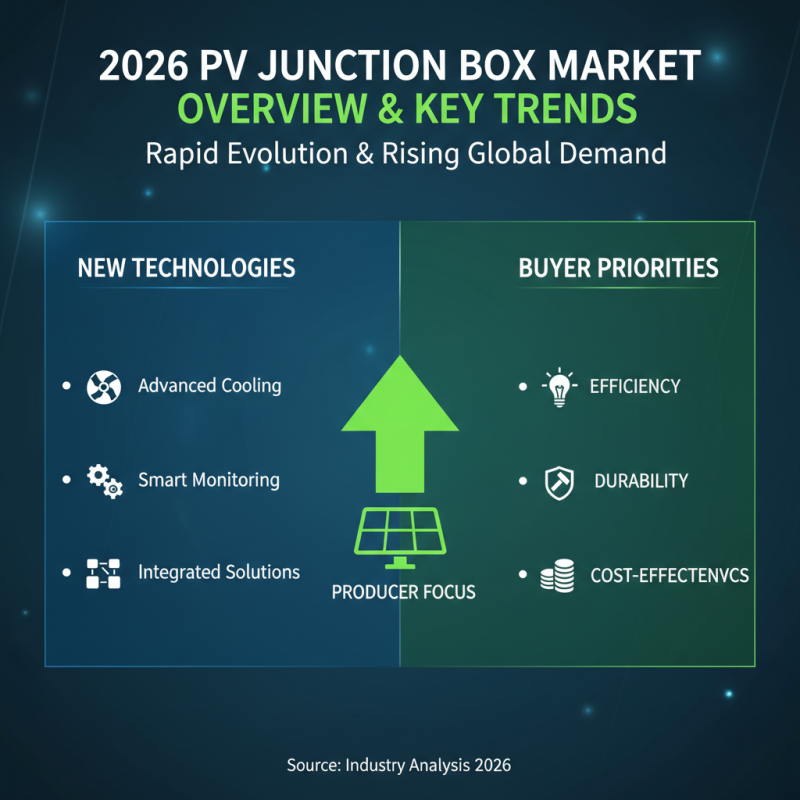
The PV junction box market is evolving rapidly in 2026. New technologies are emerging, and global demand is rising. Buyers seek efficiency, durability, and cost-effectiveness. Producers are focusing on these key aspects to meet market needs.
Innovative designs are crucial. Many manufacturers now prioritize advanced materials and better sealing methods. Solar Junction Boxes must resist harsh weather conditions. Corrosion resistance is becoming a standard requirement. Consumers also demand improved thermal performance. Optimizing heat management can increase the overall lifespan of solar panels.
While there are promising advancements, challenges remain. Some products still fall short in quality control. Inconsistent manufacturing can lead to reliability issues. The market also faces pressure from fluctuating raw material prices. Buyers need to be vigilant and proactive. Conducting thorough research is essential to make informed decisions about purchasing the right Solar Junction Box.
Factors Influencing PV Junction Box Selection for Global Buyers
When choosing photovoltaic (PV) junction boxes, several factors come into play. One significant aspect is the environmental conditions where the modules will be installed. For instance, a report by the International Energy Agency notes that PV systems in extreme climates can face higher degradation rates. Therefore, selecting junction boxes with high durability ratings is essential. These boxes should be able to withstand both high temperatures and humidity levels.
Another critical factor is the electrical characteristics of the junction box. Buyers need to consider the maximum power rating and load capacity, as mismatches can lead to safety issues or efficiency losses. A study by SolarPower Europe emphasizes that junction boxes must also offer protection against overvoltage and short circuits. Reliable protection reduces the risk of system failures considerably.
Finally, the ease of installation should not be overlooked. Many buyers may prefer junction boxes that simplify the connection process while ensuring robust sealing against moisture and dust. However, some options can complicate installation steps, potentially leading to mishaps. Addressing these challenges requires careful evaluation and sometimes additional training.
Technology Innovations in PV Junction Box Design and Efficiency
The advancement of technology in PV junction boxes is a pivotal factor in solar energy efficiency. Recent reports indicate that the global market for PV junction boxes will reach over $1.5 billion by 2026, reflecting a growing demand for increased efficiency and reliability. The design of these junction boxes has evolved significantly, particularly with the integration of improved materials and innovative layouts. These enhancements contribute to minimizing heat loss and maximizing energy output.
One notable innovation is the use of fire-resistant materials in Junction Box Pv Modules. These materials help in preventing electrical faults and enhancing safety during operation. According to a recent study, 30% of solar panel failures are attributed to junction box issues. A more robust design can reduce this risk. Moreover, the introduction of smart junction boxes has been transformative. These devices monitor the performance of solar panels continuously and provide real-time data, enabling quicker responses to potential problems.
However, the industry still faces challenges. Variability in manufacturing standards can lead to inconsistent quality among Junction Box Pv Modules. Additionally, the reliance on specific materials can pose supply chain risks. As the market grows, manufacturers must address these concerns. Continuous innovation and rigorous testing will be essential to meet market expectations for durability and efficiency.
Comparative Analysis of Leading PV Junction Box Manufacturers
When exploring the realm of Pv Junction Boxes, various manufacturers stand out due to their unique offerings. The design and durability of junction boxes play a critical role in solar systems. A reputable manufacturer ensures their PV junction boxes provide excellent protection against environmental factors. This proficiency is vital for long-term performance and reliability.
Evaluation of leading manufacturers shows differences in materials, construction, and testing standards. Many reputable companies prioritize high-quality seals to enhance moisture resistance. Others focus on innovative designs to optimize space while maintaining efficiency. Such nuances can impact the overall functionality of a solar installation.
However, not all manufacturers meet the same standards. Some products may not withstand harsh conditions. Buyers should pay careful attention to certifications and test results. Researching these aspects can reveal a manufacturer’s commitment to quality. Potential buyers must weigh various features and performance metrics before making informed decisions.
Performance Metrics: Longevity and Reliability of PV Junction Boxes
The longevity and reliability of photovoltaic (PV) junction boxes are critical factors for solar energy systems. Many industry studies emphasize that high-quality junction boxes can endure harsh environmental conditions. For instance, a report from Solar Power World highlights that junction boxes must maintain functionality at temperatures ranging from -40°C to 85°C. This performance range is essential for installations in diverse climates.
Moreover, the durability of materials used in junction boxes affects their lifespan significantly. A recent analysis indicated that UV-resistant materials can extend the operational life of these components by up to 25%. Inadequate sealing methods can lead to moisture ingress, which is a common failure point. Reports suggest that nearly 15% of junction box failures are moisture-related.
Yet, not all junction boxes perform equally. Some designs have shown susceptibility to thermal cycling. This means, over time, expansions and contractions can degrade connections. Experts recommend rigorous testing protocols to ensure reliability. A study published in the Journal of Solar Energy emphasized the importance of simulating real-world stress conditions to predict long-term performance. Continuous improvement in design and material choice is necessary to avoid past mistakes.
2026 Best PV Junction Boxes Performance Metrics
Global Regulatory Standards Affecting PV Junction Box Production
The solar energy sector is rapidly evolving, and so are the regulatory standards governing it. Various global standards significantly impact the production of photovoltaic (PV) junction boxes. These standards ensure quality, safety, and reliability in the field of solar energy. Compliance with these regulations is non-negotiable for manufacturers aiming to access international markets.
Countries implement distinct regulations. For instance, some jurisdictions prioritize testing for durability and environmental resistance. Others focus on electrical safety, requiring certifications that validate product integrity. Navigating this complex landscape can be challenging for manufacturers. Different markets have different requirements, which may lead to production delays and increased costs. It's crucial to regularly review the latest regulations, as they can evolve swiftly in response to technological advancements.
While striving for compliance can be resource-intensive, it’s essential for ensuring market access. Companies may find themselves in a difficult position if they do not keep up. Falling behind can result in lost opportunities or, worse, liability issues. Manufacturers should engage with regulatory experts. This can ensure they meet the standards essential for success in an increasingly competitive marketplace.
Cost Analysis and ROI Considerations for PV Junction Boxes in Projects
When evaluating PV junction boxes, cost analysis and ROI considerations are crucial for project success. The overall expense of a PV junction box can vary significantly based on materials, design, and technology. On average, the industry reports that junction boxes can account for 5-10% of total system costs. This is a critical factor to consider when budgeting for solar projects.
A comprehensive ROI analysis should also include maintenance costs and lifespan. Many PV junction boxes are designed to last up to 25 years, which impacts long-term financial returns. With a proper installation, the cost savings over time can be substantial. However, not all products perform equally. Some may fail prematurely, leading to unexpected expenses. Reliable testing data is vital for buyers evaluating various options.
Investing in high-quality Pv Panel Junction Box technology can enhance efficiency and reduce failure rates. Industry insights suggest that premature failures could decrease system efficiency by as much as 20%. Therefore, understanding these dynamics can help buyers make informed choices. Paying attention to warranty and support is equally essential. Experience shows that these factors significantly affect overall satisfaction and performance.
2026 Best PV Junction Boxes for Global Buyers Guide
| Model | Voltage Rating (V) | Current Rating (A) | Material | Temperature Range (°C) | Cost ($) | ROI (%) |
| Model A | 600 | 30 | Polymer | -40 to 85 | 50 | 15 |
| Model B | 1000 | 35 | Aluminum | -40 to 90 | 75 | 18 |
| Model C | 800 | 40 | Composite | -35 to 85 | 60 | 20 |
| Model D | 1200 | 50 | Plastic | -20 to 75 | 80 | 22 |
| Model E | 1500 | 45 | Metal | -40 to 100 | 90 | 25 |
FAQS
: Longevity and durability of materials are crucial. Environmental resistance also plays a significant role.
They should function effectively between -40°C to 85°C. This range is vital for various climates.
UV-resistant materials can extend operational life by up to 25%. Poor material choices can lead to failures.
Inadequate sealing can cause moisture ingress. Reports state around 15% of failures relate to moisture.
Testing predicts long-term performance under real-world conditions. It helps avoid past design mistakes.
Global standards vary, complicating compliance. Different markets have unique requirements, affecting production timelines.
Striving for compliance can be resource-intensive. This can lead to increased costs for manufacturers.
Junction boxes account for about 5-10% of total solar system costs. This is significant for budgeting.
It should include maintenance costs and lifespan, impacting long-term financial returns.
These failures may decrease efficiency by around 20%. Understanding this can influence buyer decisions.
Conclusion
The 2026 Best PV Junction Boxes for Global Buyers Guide provides a comprehensive overview of the PV junction box market, highlighting emerging trends and key factors that influence the selection process for global buyers. It delves into the latest technology innovations that enhance the design and efficiency of PV junction boxes, underscoring the importance of longevity and reliability as critical performance metrics.
Furthermore, the guide offers a comparative analysis of leading manufacturers in the industry, alongside a thorough examination of the global regulatory standards that impact production. It also addresses cost analysis and return on investment (ROI) considerations, ensuring that buyers can make informed decisions when integrating PV junction boxes into their solar projects. This resource serves as an essential tool for stakeholders seeking to optimize their investments in solar energy infrastructure.