China’s really become a major hub for manufacturing all sorts of photovoltaic components, including the Solar Junction Box. But honestly, the quality from different suppliers can vary pretty widely. Just because a company’s website looks slick doesn’t always mean their products will perform reliably out in the field.
In this guide, I’m walking you through China’s top 10 Solar Junction Box suppliers based on real-world purchasing factors. Things like how much experience they have in production, whether they meet IEC 62790 standards, IP protection levels, diode performance, material quality, and traceability. I also look at factory capacity, support for customizations, testing protocols, and how much export experience they’ve got. Because details really matter— a solid junction box needs to stand up to heat, moisture, UV rays, and thermal cycling over time. Plus, its cable connections should stay tight after years sitting on a roof or in a large solar farm.
Keep in mind, I’m not saying these are ranked in a strict order—just a helpful comparison based on what’s publicly available. Information can change, and some tech specs might need to be verified directly. Always ask for current certifications, test reports, samples, and warranty info before you commit. Visiting factories can reveal things you won’t see on a website—like inconsistent sealing, weak solder joints, or sketchy batch records. These small details can end up costing a lot down the line.
I also look at how suppliers handle engineering questions, delivery deadlines, and after-sales support. Experience counts, and honesty in communication is key. Just because a supplier offers the lowest quote doesn’t mean they’ll end up costing you less in the long run. Take your time comparing specs and make sure they match your module design, cable sizes, installation environment, and the needs of your target market.

What Is a Solar Junction Box and Why Does It Matter?
What Is a Solar Junction Box and Why Does It Matter?
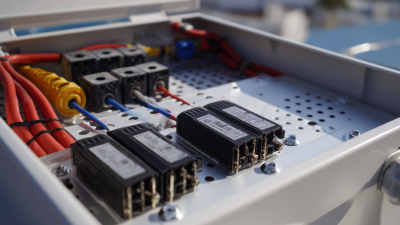
A solar junction box sits on the rear of a photovoltaic module. It connects internal ribbons to external cables. It also houses bypass diodes, which help limit hot-spot stress during partial shading. The box looks small. Its role is not.
The IEA PVPS Trends 2024 report recorded about 456 GW of new solar capacity in 2023. That rapid expansion increases demand for reliable module components. A weak seal can admit moisture. Poor thermal design can raise resistance and create heat at the contacts. Over time, these small losses may affect safety, output, and maintenance costs. Fraunhofer ISE’s Photovoltaics Report 2024 also highlights the industry’s continuing focus on higher module efficiency and long-term reliability. Better modules need junction boxes that match their electrical and thermal performance.
Tips: Check IEC 62790 compliance, diode temperature ratings, sealing quality, and cable compatibility. Ask suppliers for thermal-cycle, damp-heat, and pull-force test records. Do not judge quality by appearance alone. Field experience matters, but it can be incomplete. A junction box may pass laboratory testing and still fail under unusual installation conditions. That is why supplier audits, traceability, and independent verification remain valuable when comparing the top 10 solar junction box suppliers. Selection should consider voltage, current, installation climate, and expected service life—not only purchase price.
What Are China’s Top 10 Solar Junction Box Suppliers?
Typical Solar Junction Box Current Ratings Used in PV Modules
A solar junction box connects a photovoltaic module’s internal cell strings to external cables and normally houses bypass diodes. Current ratings of 15 A, 20 A, 25 A, 30 A, and 35 A are commonly encountered across different PV module designs. The correct rating must match the module’s maximum current, cable size, diode capacity, voltage rating, thermal performance, and required ingress protection.
How Are China’s Top Solar Junction Box Suppliers Evaluated?
China’s top solar junction box suppliers are evaluated through measurable performance, not catalog claims. Buyers should inspect the Solar Module Junction Box’s materials, diode design, sealing method, and current capacity. A reliable enclosure should resist moisture, dust, ultraviolet exposure, and repeated temperature changes. Small details matter. For example, weak cable seals may crack after years on a hot rooftop.
Independent testing is essential. Evaluators often review thermal cycling, humidity-freeze testing, insulation resistance, pull strength, and contact heating. They also check whether factory records can trace each batch, component, and inspection result. Production experience adds value when engineers can explain failure patterns from real installations. Still, laboratory results may not predict every field condition. That limitation deserves attention.
Supplier credibility also depends on transparent certifications, stable raw-material sources, and documented quality controls. Factory audits should examine soldering, crimping, automated inspection, and worker training. Delivery consistency matters because one missing component can delay an entire module line. Technical support should provide clear drawings, installation guidance, and responsive fault analysis.
Price alone is a poor filter.A cheaper junction box may create higher replacement costs later. Evaluators should compare warranty terms, test evidence, customization ability, and after-sales response. They should request samples before placing large orders. A sample can reveal loose Connectors, uneven adhesive, or unclear markings. These practical checks help distinguish genuine manufacturing capability from polished sales language.
Who Are the Top 10 Solar Junction Box Suppliers in China?
Who Are the Top 10 Solar Junction Box Suppliers in China?
China’s top ten solar junction box suppliers should be judged by verified performance, not factory size alone. The IEA PVPS Trends 2024 report recorded about 456 GW of global photovoltaic additions in 2023. China contributed nearly 217 GW. This scale creates strong demand for reliable junction boxes, connectors, bypass diodes, and thermal protection.
A practical supplier review should examine IEC 62790 certification, IP protection, voltage ratings, current capacity, and traceable quality records. The China Photovoltaic Industry Association reported domestic module production near 500 GW in 2023. That figure shows manufacturing strength, but it does not prove every supplier offers equal field performance. The top ten candidates are usually factories with automated assembly, stable raw-material control, independent testing, and long-term project references. A ranking is never perfectly clean. Warranty data can be incomplete, and low prices may hide future replacement costs.
Tips: Request recent IEC test reports, salt-mist results, thermal-cycle data, and samples from the same production line. Check whether the box supports your module current and cable diameter. Small details matter. Also compare failure feedback from installers, not only sales brochures. Even experienced buyers can overlook connector compatibility, especially when projects use mixed components.
What Are China Top 10 Solar Junction Box Suppliers?
Who Are the Top 10 Solar Junction Box Suppliers in China?
| Rank | Supplier ID | Main Manufacturing Cluster | Typical Annual Capacity | Typical Rated Current | Maximum System Voltage | Ingress Protection | Common Product Focus | Relevant Standards and Tests |
| 1 | Supplier A | Yangtze River Delta | 20–50 million units/year | 20–30 A | 1,500 V DC | IP68 | High-current boxes for bifacial and large-format modules | IEC 62790, IEC 60529, diode thermal-cycle and damp-heat testing |
| 2 | Supplier B | Pearl River Delta | 10–30 million units/year | 15–25 A | 1,500 V DC | IP68 | Standard and compact junction boxes for mono and polycrystalline modules | IEC 62790, IEC 61215 module compatibility, insulation and contact-resistance tests |
| 3 | Supplier C | Fujian Coastal Manufacturing Belt | 5–15 million units/year | 15–25 A | 1,500 V DC | IP67–IP68 | Cost-efficient boxes with factory-installed bypass diodes | IEC 62790, IEC 60529, reverse-current and temperature-rise testing |
| 4 | Supplier D | Jiangsu Solar Equipment Cluster | 5–15 million units/year | 20–30 A | 1,500 V DC | IP68 | Heavy-duty boxes designed for high-power and bifacial panels | IEC 62790, UV exposure, thermal cycling and mechanical-load testing |
| 5 | Supplier E | Zhejiang Electrical Components Cluster | 3–10 million units/year | 15–25 A | 1,000–1,500 V DC | IP67–IP68 | Miniature and low-profile boxes for space-constrained module designs | IEC 62790, flame-retardant material testing and pull-force testing |
| 6 | Supplier F | Anhui Photovoltaic Manufacturing Cluster | 3–10 million units/year | 15–20 A | 1,500 V DC | IP68 | Integrated boxes for automated module assembly lines | IEC 62790, automated soldering validation and accelerated-aging tests |
| 7 | Supplier G | Shandong Renewable-Energy Equipment Cluster | 1–5 million units/year | 15–25 A | 1,000–1,500 V DC | IP67–IP68 | Outdoor-use boxes optimized for cold and high-humidity environments | IEC 62790, damp-heat, cold-temperature and salt-mist testing |
| 8 | Supplier H | Hubei Electrical Manufacturing Cluster | 1–5 million units/year | 10–20 A | 1,000–1,500 V DC | IP67 | Economical standard boxes for residential and commercial modules | IEC 62790, dielectric-strength, insulation-resistance and enclosure tests |
| 9 | Supplier I | Guangxi Electronics Manufacturing Cluster | 1–5 million units/year | 15–20 A | 1,000–1,500 V DC | IP67–IP68 | Customized box layouts and private-label manufacturing services | IEC 62790, customer-specific validation and environmental-reliability tests |
| 10 | Supplier J | Sichuan New-Energy Equipment Cluster | Below 1 million units/year | 10–20 A | 1,000–1,500 V DC | IP67 | Small-batch customized boxes for specialty and distributed solar projects | IEC 62790, ingress-protection, thermal-rise and mechanical-strength tests |
Note: Supplier names are intentionally anonymized. Capacity and electrical ratings are representative public-market ranges for Chinese solar junction-box manufacturers; buyers should verify current certifications, test reports, production capacity and product specifications directly with each supplier.
What Products and Technologies Do These Suppliers Offer?
China’s top ten solar junction box suppliers offer more than simple plastic enclosures. Their main products include split, three-part, and compact junction boxes for different module layouts. A Junction Box For Solar Pv Module usually contains bypass diodes, copper terminals, sealing materials, and pre-attached cables. Suppliers commonly provide IP68 protection, flame-resistant housings, and connector options for automated assembly lines. Some designs support high current modules above 20 amperes.
Thermal management is a major technology focus. Engineers select diode types that reduce heat concentration during partial shading. They also use larger contact areas to lower electrical resistance. In factory testing, boxes may face thermal cycling, humidity exposure, pull-force checks, and insulation testing. Certification work often references IEC 62790 and related photovoltaic requirements. Details matter. A small sealing defect can allow moisture inside after years outdoors.
Several suppliers now develop customized boxes for glass-glass modules, thin frames, and high-voltage systems. Some offer pre-assembled cable lengths, laser marking, and automated soldering solutions. Others improve silicone adhesion around the cover and cable entry points. Field experience shows that installation mistakes still cause failures, even with strong designs. Excessive bending near the cable exit remains a common weakness. Suppliers are therefore refining strain relief, connector locking, and visual inspection methods. Costs also differ sharply when materials, testing depth, and traceability requirements change. Procurement teams should examine actual test records, not only catalog claims.
How Do China’s Leading Suppliers Compare in Quality and Cost?
China’s top 10 solar junction box suppliers compete through price, reliability, and production scale. The market is expanding quickly. IRENA’s Renewable Capacity Statistics 2024 reported 346 GW of new solar capacity worldwide in 2023, creating strong demand for dependable connection components. However, industry reports rarely separate junction box costs from total module costs. That limitation matters.
Quality begins with measurable details. A reliable Junction Box Of Solar Panel should meet IEC 62790 requirements and withstand thermal cycling, humidity, ultraviolet exposure, and mechanical stress. Buyers should check IP ratings, diode temperature performance, contact resistance, and traceability records. TÜV and other accredited laboratory reports can support these claims, but certificates alone are not enough. Factory audits should examine soldering, adhesive control, cable crimping, and final inspection. Small defects can appear after years on a hot rooftop.
Cost comparisons require more than the lowest quotation. IRENA recorded solar module prices falling sharply during 2023, increasing pressure on component suppliers to reduce margins. Lower-cost suppliers may offer automated assembly and local material sourcing. Yet cheaper plastic, weak diodes, or inconsistent connectors can raise replacement costs. The better suppliers provide sample testing, batch records, clear warranties, and stable delivery schedules. I would not rank a supplier from price alone. A practical review should compare landed cost, failure risk, testing evidence, and response time. Some claims remain difficult to verify. That is where careful sampling matters.
How Can Buyers Choose the Right Chinese Supplier?
Choosing among China’s top 10 solar junction box suppliers requires more than comparing online rankings. A reliable supplier should understand the full Solar Panel Junction Box application, including heat exposure, moisture, cable stress, and long-term outdoor use. Ask for factory certifications, quality procedures, and recent test records. Verify whether testing covers electrical safety, temperature cycling, humidity, insulation, and sealing performance. A supplier with documented traceability can identify production batches quickly when problems appear.
Request samples before signing a large order. Inspect the housing, diode connections, adhesive, cable length, and connector fit. Ask how incoming materials are checked and how rejected parts are controlled. A polished catalogue can still hide weak process discipline. That lesson is easy to overlook. Communication also matters. Clear drawings, response times, packaging details, and payment terms reduce avoidable disputes. Suppliers should explain production capacity honestly, rather than promising every specification immediately.
Tips: Compare at least three suppliers using the same checklist. Visit the factory, or arrange a live video audit. Review sample test reports with an independent engineer when possible. Confirm the supplier’s experience with your panel design and target climate. Do not choose only by the lowest quotation. A slightly higher price may reflect better materials, inspection, and warranty support. Still, buyers should challenge vague claims and record every technical agreement in writing. During evaluation, allow room for doubt; even experienced teams can miss a small sealing defect.
Conclusion
This guide explores China’s top 10 Solar Junction Box suppliers and explains why these components are essential to the safety, efficiency, and durability of photovoltaic modules. It introduces the role of a junction box in protecting electrical connections, managing current flow, and supporting reliable outdoor operation. The suppliers are evaluated according to manufacturing capability, product consistency, certifications, testing standards, customization services, production capacity, delivery performance, and after-sales support.
The article also compares the main products and technologies available, including solutions for different module designs, power levels, environmental conditions, and installation requirements. It discusses how buyers can balance quality, technical performance, and total cost rather than focusing only on the lowest quotation. Finally, it provides practical guidance for selecting the right Chinese supplier by reviewing technical specifications, sample quality, compatibility, warranty terms, communication efficiency, and long-term cooperation potential.