Leave Your Message
Picking the right Industrial Energy Storage Connectors in 2026 isn't just about matching voltage and current specs anymore. Batteries are cramming more power into tighter spaces, and the thermal management needs are tougher than ever. So, a connector has to handle vibrations, dust, moisture, regular maintenance, and accidental bumps or misalignments. Plus, it needs clear polarity markings and reliable touch protection—no cutting corners there.
As Dr. Michael Heinemann, the CEO of Phoenix Contact, puts it, “Reliability is built into every little detail of the system.” And that couldn’t be more true, especially when it comes to energy storage. A tiny connector hiding behind a battery rack might seem insignificant, but one loose contact can cause heat build-up, system downtime, or a tricky service call that no one wants to deal with. It’s funny how small parts can have such big consequences.
This guide is here to help you figure out how to choose a solid Energy Storage Connector for industrial battery systems in 2026. We’re looking at all the key factors—continuous current, peak loads, contact resistance, insulation quality, locking mechanisms, cable flexibility, and environmental sealing. Real-world experience really matters here. A connector that tests perfectly in a lab might not hold up when it’s facing the heat of a working inverter or the daily vibrations inside a cabinet.
And here's something to keep in mind: bigger isn’t always better. Sometimes, going for the largest connector just makes installation more complicated and can bump up costs unnecessarily. It’s worth questioning whether you really need the biggest beefiest part or if a smarter choice exists. When shopping around, make sure to check performance data, lifecycle info, supplier traceability, and support services—you don’t want to rely just on a shiny datasheet.
Ultimately, the best industrial energy storage Connectors deliver strong electrical capacity, keep things safe to handle, and are practical enough for maintenance. They should actually fit the cabinet you have, not just look perfect on paper. When it comes to 2026 and beyond, picking the right connector means leaning on real evidence, doing thorough inspections, and honestly considering what still might go wrong—that’s what makes all the difference.
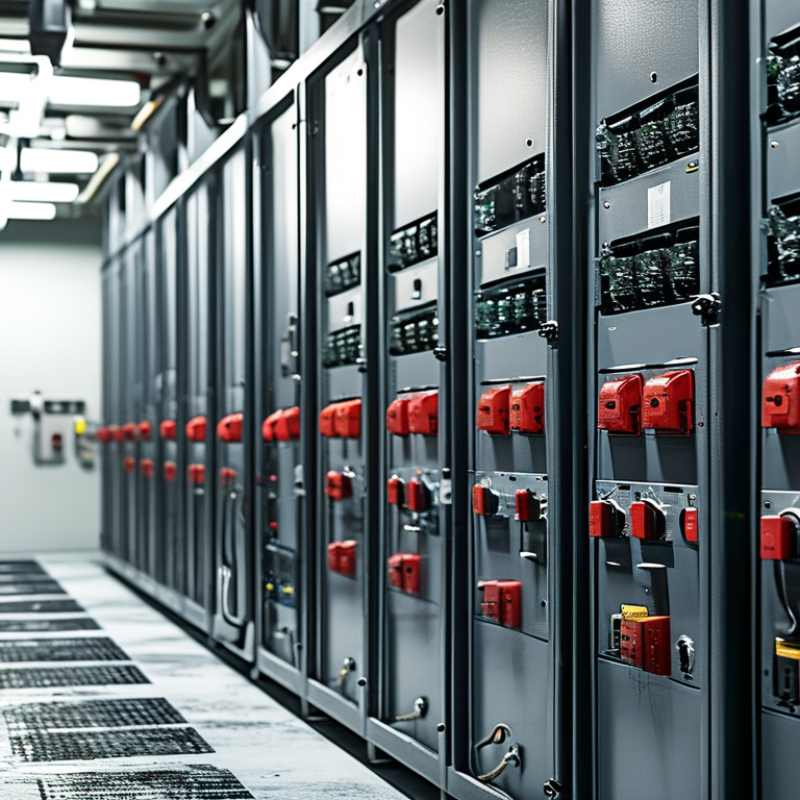
Industrial energy storage connectors are engineered interfaces between battery modules, busbars, inverters, and distribution equipment. They carry high current safely while resisting heat, vibration, dust, and moisture. Unlike ordinary electrical plugs, these connectors often include touch protection, locking mechanisms, and clear polarity guidance. Some systems also use auxiliary contacts for monitoring and high-voltage interlock functions.
In 2026, selecting the right connector means checking the complete operating environment. Review current rating, voltage range, contact resistance, temperature rise, ingress protection, and mating cycles. The connector must match the Energy Storage Cable size and insulation structure. A loose connection may create heat at a terminal. That small fault can spread through a cabinet. It happens.
Tips: Measure the cable before ordering. Confirm the conductor cross-section and bend radius. Test the connector under expected load, not only in a workshop. Check whether technicians can disconnect it without special tools. In dusty or humid rooms, sealed housings and corrosion-resistant contacts deserve serious attention. Mechanical fit is not enough. A connector may fit perfectly but fail after repeated thermal expansion. Ask for test records, installation instructions, and traceable material information. Field experience shows that rushed selection often overlooks service access. I would also question impressive ratings without clear testing conditions. Reliability depends on the entire connection system, not one attractive specification.
| Selection Dimension | Typical Industrial Requirement | Common Connector Configuration | Why It Matters | Selection Guidance |
|---|---|---|---|---|
| Application Position | Battery module, battery rack, power conversion system, busbar, or auxiliary control circuit | High-current power connector, busbar connector, signal connector, or hybrid power-and-signal connector | The installation position determines the required current capacity, insulation level, mechanical design, and service method. | Define whether the connector is used inside a battery enclosure, between racks, or in an outdoor power cabinet before selecting the connector type. |
| System Voltage | Typically 48 V DC, 400–600 V DC, or up to approximately 1,500 V DC in utility-scale systems | Touch-safe insulated housing with appropriate creepage and clearance distances | Higher voltage increases the risk of electric shock, insulation breakdown, and arcing during connection or disconnection. | Choose a connector with a continuous DC voltage rating equal to or higher than the maximum system voltage, including charging and fault conditions. |
| Continuous Current | Approximately 30–500 A for many battery and rack connections; higher values may require parallel paths or busbars | Single-pole or multi-pole high-current contacts with low-resistance contact interfaces | Current capacity affects heat generation, cable size, contact temperature, and long-term reliability. | Rate the connector for the real continuous current after considering ambient temperature, enclosure ventilation, duty cycle, and cable derating. |
| Peak and Inrush Current | Short-duration current may exceed continuous current during inverter startup, motor loads, or fault events | High-current contacts combined with pre-charge circuitry or auxiliary contacts | Short current peaks can cause contact heating, welding, or damage if the connector is selected only for normal operating current. | Check both continuous and short-time current ratings. Use a pre-charge circuit when the connected DC bus has substantial capacitance. |
| Ingress Protection | IP20 or higher for protected indoor enclosures; IP54–IP67 is commonly considered for exposed or outdoor locations | Sealed housing, gasket, cable gland, and locking mechanism for higher protection levels | Dust, moisture, condensation, and water spray can reduce insulation resistance and accelerate corrosion. | Specify the complete mated assembly rating. The connector alone may not maintain its protection level if the cable seal, panel cutout, or mating interface is unsuitable. |
| Operating Temperature | Common industrial ranges include approximately −40 °C to +85 °C, with derating at elevated temperature | Temperature-resistant insulating materials and contacts designed for the expected thermal load | Connector current capacity and material performance can change significantly at high or low temperatures. | Review the derating curve rather than relying only on the headline temperature range. Include heat from adjacent cells, busbars, and power electronics. |
| Cable Compatibility | Common power cable cross-sections range from approximately 6 mm² to 240 mm², depending on current and installation method | Crimp, screw, busbar, or laminated-busbar termination | Incorrect conductor size or termination can create localized hot spots and increase voltage drop. | Match the connector contact system to the conductor material, cable diameter, bend radius, crimp tooling, and required installation space. |
| Contact Resistance | As low as practical; many high-current connector designs target the low-milliohm range when new and correctly assembled | Plated contact surfaces with controlled contact force and stable mechanical retention | Even a small resistance becomes a significant heat source at high current because power loss follows I²R. | Compare initial resistance, resistance after endurance testing, and resistance after vibration or thermal cycling—not only the initial specification. |
| Mating Cycles | Approximately 50–500 cycles for serviceable industrial connections; fixed internal connections may require fewer cycles | Keyed, locking, or tool-assisted design with replaceable seals where applicable | Frequent maintenance, module replacement, and emergency servicing can wear contacts, latches, and seals. | Select a higher-cycle design for regularly serviced battery racks. For infrequent service, prioritize electrical performance and secure locking. |
| Touch Safety | Finger-safe construction and protection against accidental contact with energized contacts | Shrouded contacts, recessed terminals, interlock features, and touch-proof housings | Battery energy storage systems can retain dangerous DC voltage even when the primary equipment is stopped. | Use touch-safe connectors and define a controlled maintenance procedure. Consider an auxiliary interlock circuit to confirm proper mating before energization. |
| Locking and Polarization | Positive locking with clear visual or tactile confirmation | Keyed housing, latch, bayonet, threaded coupling, or bolt-secured interface | Prevents incorrect mating, accidental separation, reverse polarity, and intermittent connections caused by vibration. | Use mechanical polarization for DC polarity control and choose a locking method suited to vibration, access limitations, and service frequency. |
| Pre-Charge and Interlock | Recommended where a power conversion system or DC link contains significant input capacitance | Auxiliary contacts, high-voltage interlock loop, and a dedicated pre-charge path | Pre-charge limits inrush current and helps prevent arcing or contact welding during connection. | Do not use the main power contacts as a substitute for a properly designed pre-charge circuit. Verify sequencing with the battery management system. |
| Mechanical Durability | Resistance to vibration, shock, cable pull, and enclosure movement | Strain relief, robust housing, secondary locking, and secure panel or busbar mounting | Mechanical movement can increase contact resistance, loosen terminals, and compromise seals. | Review vibration and shock test results for the intended installation. Provide cable support so connector contacts do not carry cable weight. |
| Corrosion Resistance | Required in humid, coastal, chemical, or industrial environments | Corrosion-resistant contact plating, sealed housings, and compatible fasteners | Corrosion can increase contact resistance and reduce the effectiveness of the sealing system. | Evaluate salt spray, humidity, chemical exposure, and galvanic compatibility between contacts, terminals, busbars, and fasteners. |
| Relevant Verification | Electrical, thermal, mechanical, environmental, and safety testing appropriate to the application | Testing may reference connector safety, enclosure protection, insulation, temperature rise, and endurance requirements | Published ratings are meaningful only when the connector has been tested under conditions comparable to the intended system. | Request test conditions, derating data, dimensional drawings, crimp requirements, and installation instructions. Verify the complete connector-and-cable assembly. |
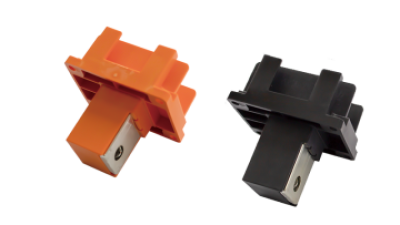
As battery storage expands, dependable high-current connections are becoming essential to system safety and uptime. The International Energy Agency’s *Batteries and Secure Energy Transitions* report (2024) indicates that global battery storage capacity must grow dramatically by 2030 to support renewable integration and grid flexibility. In this environment, the Energy Storage Connector QCES-350A is designed for demanding battery-to-inverter and battery-rack applications, supporting currents up to 350A while maintaining a stable, low-resistance connection.
Its multiple alternative positions allow engineers to select a suitable installation orientation, helping simplify cable routing in compact enclosures and modular energy storage systems. The connector also accommodates a wide range of cable sizes, improving compatibility across different battery capacities and power architectures. According to the U.S. Department of Energy’s *Energy Storage Grand Challenge Roadmap*, standardization, safety, and manufacturability are important factors in accelerating energy storage deployment—areas directly supported by a flexible connector design.
For field installation and maintenance, the QCES-350A requires no special tools, reducing assembly time and limiting opportunities for connection errors. Its sealed construction helps protect electrical interfaces from dust and moisture, while the secure locking structure supports reliable operation under vibration and repeated service conditions. Lead-free certification further supports environmentally responsible deployment and helps system integrators meet increasingly stringent material and sustainability requirements.
: Choose a connector rated above maximum system voltage. Include charging surges and electrical transients. Leave a safety margin. A 1,000-volt system should not rely on a 1,000-volt limit.
Match the connector to continuous current and short startup peaks. Heat increases contact resistance. Check cable size, crimp quality, ventilation, and actual ambient temperature together.
Use the formula P = V × I. A 500-kilowatt system at 1,000 volts carries about 500 amperes. Efficiency losses may increase the practical requirement.
Lower voltage requires higher current for the same power. That may require larger contacts, stronger cables, and improved thermal control. Small details matter.
Conductive copper alloys suit heavy-current applications. Suitable plating can reduce oxidation and contact resistance. Housing materials should resist heat, impact, oils, moisture, and flames.
Request evidence for vibration, thermal cycling, moisture, insulation resistance, and repeated mating. Salt exposure may matter near coastal sites. Appearance alone proves little.
Look for touch protection, secure locking, clear polarity markings, and adequate creepage distances. Confirm insulation coordination and enclosure protection. A similar-looking connector may still be unsuitable.
Inspect crimp height, conductor insertion, locking position, torque, and cable bend radius. Use calibrated tools. Thermal imaging can reveal hot spots after commissioning.
Record torque checks, corrosion, discoloration, damaged seals, and unusual temperatures. Inspect connectors under realistic operating loads. A document review can miss dusty-cabinet failures.
Choosing the right Industrial Energy Storage Connectors in 2026 requires more than matching plug dimensions. Start by evaluating the energy storage system’s voltage, continuous and peak current, power capacity, cable size, and connection layout. The connector should provide sufficient electrical headroom while supporting secure installation, efficient power transfer, and reliable maintenance. Material selection is also important: durable housings, corrosion-resistant contacts, effective insulation, and clear touch-protection features can improve service life and operational safety.
Industrial environments demand different connector designs. Systems exposed to dust, moisture, vibration, chemicals, temperature changes, or frequent connection cycles may require stronger sealing, locking mechanisms, strain relief, and environmental protection. Before purchasing, verify applicable industry standards, mechanical and electrical compatibility, polarity, keying, and installation requirements. Check whether tools, replacement parts, inspection procedures, and maintenance access are readily available. A well-matched connector should support the full life cycle of the storage system, from commissioning and routine servicing to future expansion, while reducing downtime and connection-related risks.