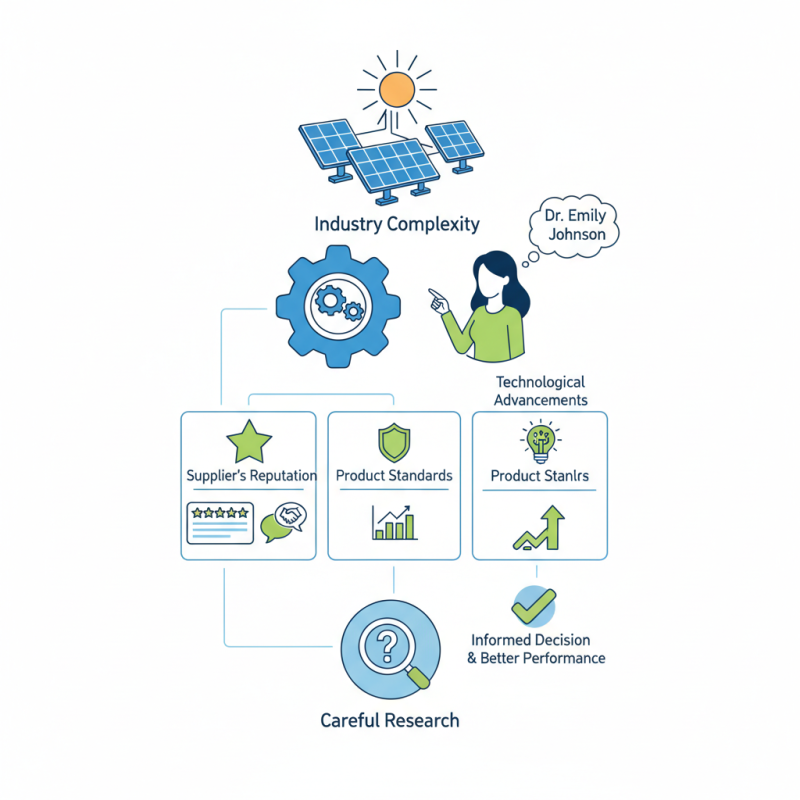
When you're on the hunt for a quality solar Microinverter supplier, it’s pretty important to get a handle on how tricky this industry can be. Like Dr. Emily Johnson, a top expert in solar tech, once pointed out, “Picking the right microinverter is key to making your whole system work efficiently.” Her advice really hits home—making informed choices here matters a lot.
There are a bunch of things to think about. First off, look into the supplier’s reputation. Check out customer reviews and industry ratings—that can tell you a lot. A trustworthy supplier should know their stuff and be good with customer support. Also, don’t forget to peek at their warranty and how well their products perform. These little details are essential if you want your system to last.
And hey, tech is always evolving. It’s a good idea to go with microinverters that incorporate some of the latest advancements—they can really boost performance. That said, be careful not to get carried away with something super complicated—you don’t want to be totally lost trying to figure it out. Finding that sweet spot between cool features and ease of use is really important. Sure, picking the right supplier feels a bit overwhelming at first, but as long as you do your homework, you’ll definitely find the right one.
Understanding Solar Microinverters: A Brief Overview
Understanding Solar Microinverters: A Brief Overview
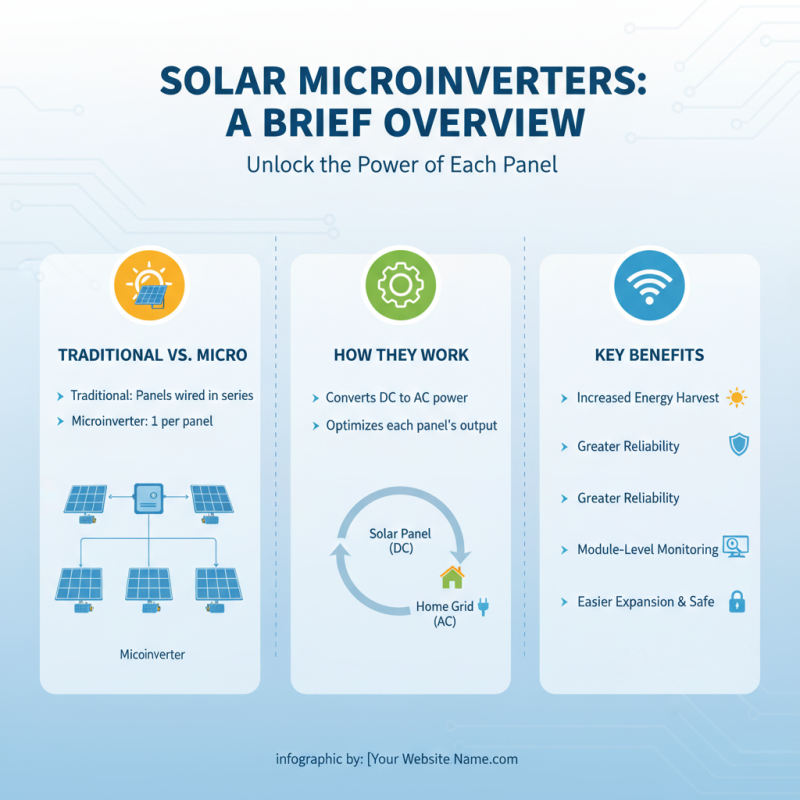
Solar microinverters play a vital role in converting solar energy into usable electricity. Unlike traditional string inverters, microinverters operate on a module level. This means that each solar panel works independently. If one panel underperforms, others can still maximize output. According to a recent report by the International Energy Agency (IEA), the market for microinverters is expected to grow by 12% annually through 2025.
Despite their advantages, selecting the right solar microinverter can be tricky. Some models may underperform in low-light conditions, leading to energy loss. A study by SolarPower Europe highlights that poor quality units can reduce efficiency by up to 20%. It's essential to evaluate the quality and efficiency ratings before making a choice.
Tips: Look for microinverters with a long warranty. A 20- to 25-year warranty is a good sign of durability. Do not overlook customer reviews. They can provide valuable insights into real-world performance. Always consider the manufacturer’s reputation. A strong track record often correlates with reliable products. Failing to do this may lead to wasted investment.
Key Features to Look for in a High-Quality Microinverter
When selecting a high-quality solar microinverter, it is essential to focus on several key features. Efficiency stands out as a critical factor. Studies indicate that top-performing microinverters can reach efficiency ratings as high as 96-97%. This high level of efficiency directly impacts energy production, maximizing the return on investment over the product's lifespan.
Reliability is another important aspect. Quality microinverters often come with extended warranties, typically ranging from 10 to 25 years. This warranty period not only reflects manufacturer confidence but also assures customers of durability. Furthermore, consider the temperature rating. Microinverters should operate efficiently at high temperatures, especially in sunny climates. A microinverter that can tolerate heat typically lasts longer and performs better.
Additionally, installation ease and technical support should not be overlooked. Some products require complex installations, which might lead to extra costs and time. A system that provides clear installation guidelines saves both time and resources. Also, access to responsive customer service can be invaluable. A lack of support when issues arise can lead to significant downtime, affecting energy production. Balancing these features will help in identifying a reliable and high-quality supplier in this growing market.
How to Choose the Best High Quality Solar Microinverter Supplier? - Key Features to Look for in a High-Quality Microinverter
| Key Features | Importance | Suggested Specification |
| Efficiency Rating | High efficiency ensures maximum energy conversion. | 95% or higher |
| Durability | Long lifespan reduces replacement costs. | 25 years warranty |
| Temperature Coefficient | Good performance in high temperatures. | -0.3%/°C or better |
| Certification | Compliance with international standards. | UL, CE, or IEC certification |
| Monitoring Capability | Real-time performance tracking. | Smart monitoring app |
| Grid Compatibility | Seamless integration with local grid. | Compatible with multiple grid types |
| Installation Ease | Simpler installation reduces labor costs. |
Plug-and-play design |
| Customer Support | Access to assistance for troubleshooting. | 24/7 customer service |
Evaluating the Reputation of Solar Microinverter Suppliers
When evaluating the reputation of solar microinverter suppliers, it's crucial to look closely. Reviews and testimonials from previous customers can provide valuable insights. Analyze feedback on various platforms to gauge overall satisfaction. High ratings are encouraging, but beware of overly positive reviews that lack detail. Genuine customers often describe specific experiences.
Consider the supplier’s history in the market. Longevity doesn’t always mean quality, yet it does indicate stability. Newer companies might offer innovative products but may lack reliable support. Investigate online forums and social media to understand the trends. These spaces often reveal candid opinions that official channels might not show.
Transparency is key. A reputable supplier should openly share product details, warranties, and support policies. Check how promptly they respond to inquiries. A slow or vague response could signal potential issues. Trust your instincts; if something feels off or too good to be true, it probably is. Ultimately, balancing intuition with research will lead to better choices.
Comparing Performance Metrics of Different Microinverters
When selecting a solar microinverter, performance metrics are crucial. Efficiency is a key factor. Higher efficiency means more energy harvested from sunlight. By analyzing the conversion rates, one can see how effectively an inverter transforms DC power to AC power. Look for models that boast ratings above 95%. This small difference significantly impacts overall energy output.
Another important metric is reliability. A good microinverter should withstand various environmental conditions. Look at temperature ranges and resistance to moisture. Some units may fail under extreme heat. Understand that not all products hold up well over time. This means analyzing warranty terms. A longer warranty may indicate higher manufacturer confidence in their product’s durability.
Monitoring features also matter. Real-time data allows users to track performance. Some systems alert you to issues instantly. Compare how different models provide insights. Some options might lack user-friendly interfaces, making them hard to read. It’s crucial to consider usability along with technical specifications. Remember, a detailed comparison requires effort and critical thinking.
Examining Warranty and After-Sales Support Options
When choosing a high-quality solar microinverter supplier, warranty and after-sales support are crucial. Many consumers overlook these factors, yet they significantly impact overall satisfaction. A recent industry report revealed that 85% of customers prioritize warranty terms when making a purchasing decision. Extended warranties can reflect a supplier's confidence in their product.
Many suppliers offer warranties ranging from 5 to 25 years. However, not all warranties are created equal. Some might cover only parts, while others include labor costs. Ensure you read the fine print. Consider whether the service is local or requires you to manage shipping. A study showed that 60% of issues arise during installation or the early months. Quick access to after-sales support can minimize downtime and frustration.
After-sales service should include technical assistance and a clear return policy. For instance, companies that provide online support or local service representatives tend to receive higher customer satisfaction scores. On the flip side, lack of support can lead to poor user experiences. A 2022 survey indicated that 40% of customers who faced support issues would not recommend their supplier. Research the responsiveness of potential suppliers carefully. It can save you a lot of trouble down the line.
Analyzing Pricing Strategies and Cost-Effectiveness
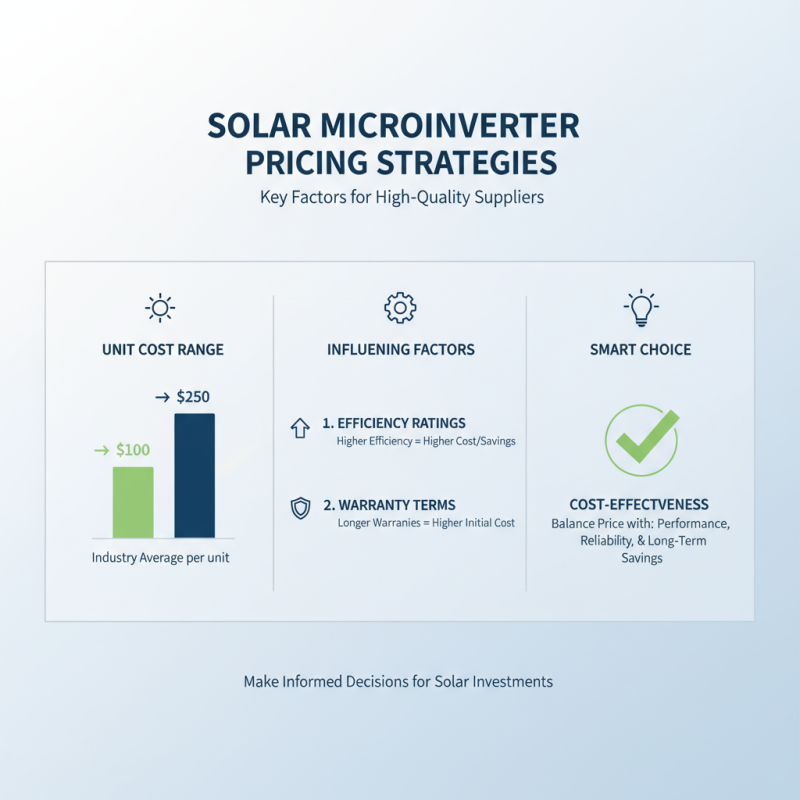
When selecting a high-quality solar microinverter supplier, pricing strategies play a crucial role. Industry reports indicate that costs can vary significantly. For instance, microinverters may range from $100 to $250 per unit. Factors like efficiency ratings and warranty terms impact these prices. Understanding cost-effectiveness helps you make informed choices.
Tips: Always compare similar products. Look for performance data and long-term benefits. A slight price difference may lead to significant savings over time.
buyers should also consider hidden costs, like installation fees. Some suppliers may offer low upfront prices but include extensive installation costs later. A report by the Solar Energy Industries Association highlights that overall project costs can rise by 30% with added fees. Evaluating the complete financial picture is essential.
Tips: Request a detailed quote. Ask about potential hidden charges. Transparency is key in choosing the right supplier. Keep an eye on product reviews and user feedback.
Researching Industry Certifications and Compliance Standards
When selecting a solar microinverter supplier, it’s crucial to focus on industry certifications and compliance standards. These certifications ensure that the products meet safety and quality requirements. Look for suppliers that provide proof of compliance with recognized standards. This might include certifications like IEC or UL, which indicate rigorous testing and quality assurance.
However, not all certifications are created equal. Some suppliers might use vague claims about compliance. It's vital to investigate the validity of these claims. Checking the supplier’s history with compliance issues can reveal potential red flags. Consider how often they’ve faced compliance challenges and how they resolved them.
Quality control is another aspect impacted by certifications. Some suppliers may prioritize cost savings over quality to adhere to standards. This can affect the long-term reliability of their products. Reflecting on these aspects can help you avoid costly mistakes. Choosing the right supplier requires diligence in verifying their commitment to industry standards.
Comparison of Industry Certifications for Solar Microinverters
Exploring the Essential Features and Benefits of the 3Qxy Multi-Core Solar/PV Junction Box
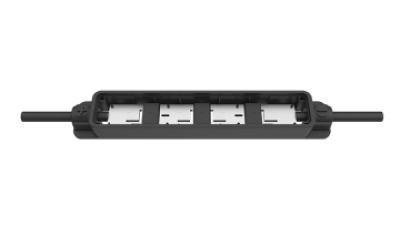
The 3Qxy Multi-Core Solar/PV Junction Box presents an innovative solution for modern solar energy systems, effectively balancing performance and efficiency. Its freely switchable rated current enhances adaptability, allowing it to seamlessly meet the rigorous dual high-voltage standards of IEC/UL 1500V. This feature is crucial for installations that require flexibility and reliability in diverse operating conditions.
Designed with a compact structure, the junction box significantly reduces its overall volume while minimizing the amount of potting compound needed. This optimization not only improves the heat dissipation performance but also enhances cost-effectiveness. Such characteristics are particularly beneficial for manufacturers looking to streamline production processes. The focus on stable mass production across multiple facilities worldwide ensures that the supply chain remains efficient, enabling timely delivery of units to meet growing demand in the renewable energy sector. With its emphasis on innovation and practicality, the 3Qxy Junction Box stands out as a vital component for advancing solar technology.
FAQS
: It is often used for home improvement and decoration. Many people use it for DIY projects.
Yes, customization options are available. You can select sizes and colors to fit your needs.
Cleaning requires mild soap and a soft cloth. Avoid abrasive cleaners that may scratch the surface.
It is designed to withstand daily use. However, excessive force could lead to damage.
Avoid exposure to extreme temperatures. This could affect the material's integrity over time.
The warranty typically lasts one year. Ensure to keep your purchase receipt for claims.
Yes, returns are accepted within a specific period. The item must be unused and in original packaging.
Customer support is available to assist with issues. Detailed descriptions of your problem help speed up the process.
Some items may require assembly. Instructions will be provided, but you might need extra tools.
Ensure the surface is clean and dry. Follow the instructions carefully to avoid mistakes.
Conclusion
When choosing a high-quality solar microinverter supplier, it is essential to start with a clear understanding of solar microinverters and their functionality. These devices play a crucial role in optimizing solar energy production by converting the direct current (DC) generated by solar panels into alternating current (AC). Key features to consider include efficiency ratings, reliability, and design specifications that align with your specific energy needs.
Further, evaluating the reputation of potential suppliers is vital. Look for reviews, testimonials, and industry certifications that ensure compliance with safety and performance standards. It is also important to compare the performance metrics of various models, examine warranty and after-sales support options, and analyze pricing strategies to gauge overall cost-effectiveness. By thoroughly researching these aspects, you can make an informed decision on selecting the best solar microinverter supplier to meet your energy requirements.