When you're picking out a 4mm2 cable, there are a few key things you really want to keep in mind. The right cable can actually make a big difference in how well everything works. Not all cables are the same—some differ in quality, insulation, and what they’re best suited for. A 4mm2 Cable is great because it can handle certain amperages, so it’s pretty versatile for different setups.
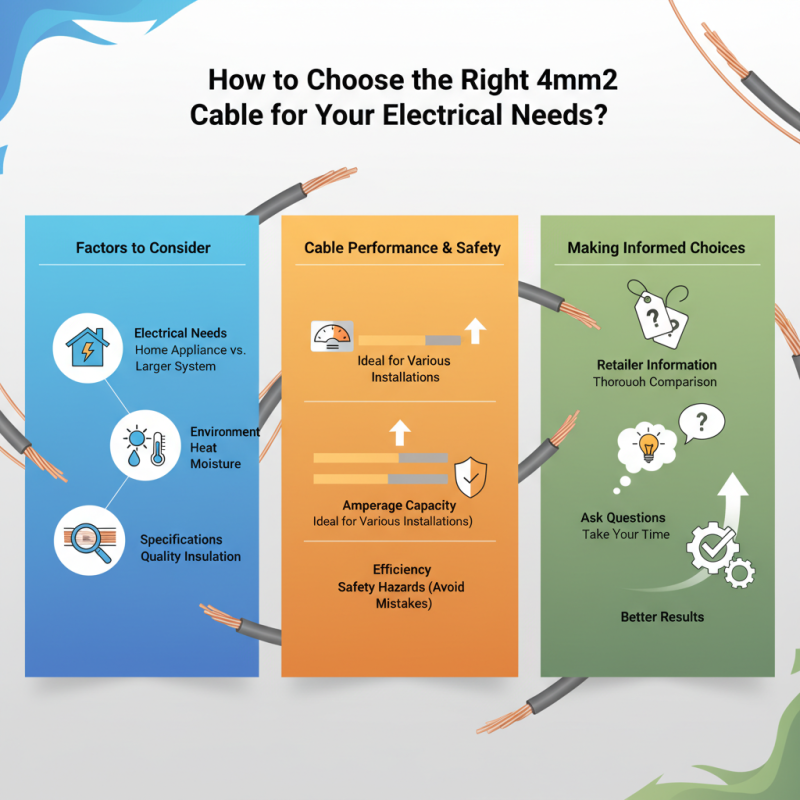
Figuring out your actual electrical needs is super important. Are you powering a small appliance or maybe a bigger system? The environment matters too—things like heat, moisture, and other conditions can affect how the cable performs. Sometimes folks overlook these little details, but they can end up being pretty critical. Honestly, a lot of people underestimate how important it is to choose the right cable size. If you pick wrong, it might lead to inefficiencies or even safety issues.
When you're shopping around, definitely pay close attention to the specs. Not all sellers give clear info, and some might even try to trick you into buying something that’s not quite right. Taking a little time to compare options can really pay off—you want to make sure you get the best 4mm2 cable for what you need. Don’t rush it, and don’t hesitate to ask questions. Making smart, informed choices always leads to better results—and peace of mind, too.
Understanding the Basics of 4mm2 Cables and Their Applications
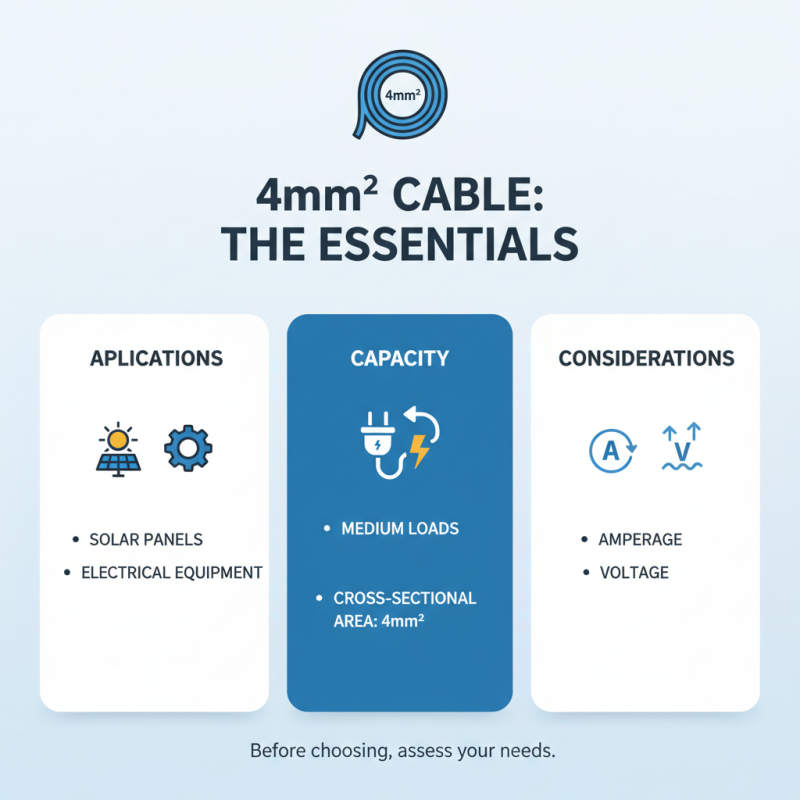
When selecting a 4mm2 cable, understanding its basics is crucial. These cables are typically used for various applications, such as connecting solar panels or electrical equipment. They have a cross-sectional area of 4mm², making them suitable for medium loads. Consider amperage and voltage requirements before making a choice.
Tips: Always check the insulation type. Different environments require different insulation materials. For outdoor uses, UV-resistant jackets are essential. If you're connecting to a solar system, choose a Solar Cable designed for longer lifespans and enhanced durability.
Remember that proper installation is key. Even the best cable can fail if not installed correctly. Ensure that connections are secure and follow local regulations. Some users may struggle with understanding gauge ratings. It’s important to familiarize yourself with these measurements for safety and efficiency.
Identifying Your Electrical Load Requirements for 4mm2 Cables
When selecting a 4mm2 cable, understanding your electrical load is crucial. Start by calculating the total wattage of all devices you plan to connect. This includes lights, appliances, and any machinery. Each device has a rated power, usually indicated on labels. Add these up carefully. If your estimated load approaches the cable's limit, you may need a larger gauge, like a 6mm2 Cable.
Consider the distance between your power source and the devices. Longer distances can lead to voltage drop. A cable that's too small may not deliver adequate power. This can cause overheating or equipment damage. Ensure you're factoring in both distance and load when making your choice.
Check for any specific local regulations or guidelines. They may dictate minimum cable sizes for safety reasons. Neglecting these could lead to dangerous situations. Reflect on your future needs as well. If you anticipate adding more devices, a slightly larger cable now may save you trouble later.
Evaluating Different Types of 4mm2 Cables Available on the Market
When selecting a 4mm2 cable, various types are available, each serving different purposes. Common options include single-core and multi-core cables. Single-core cables are great for direct connections. They offer simplicity but lack flexibility. Multi-core cables provide more versatility. They allow for easier installation in tight spaces.
Consider what you need the cable for. Will it support high currents? Or will it face significant bends? These factors impact your choice. Look for cables with good insulation. This prevents accidental shorts. Some cables are better for outdoor use. They withstand moisture and temperature changes.
Tips: Always check the cable's specifications before purchasing. Ensure it meets your electric load requirements. Consider future needs too. Choosing a slightly thicker cable may save you headaches later. It’s better to be cautious than to redo installations. Evaluate whether you may need longer lengths in the future.
How to Choose the Right 4mm2 Cable for Your Electrical Needs?
| Cable Type | Material | Max Current Rating (A) | Usage/Application | Installation Environment |
| Single Core | Copper | 32 | Domestic wiring | Indoor |
| Multi-Core | Copper | 30 | Industrial machinery | Indoor/Outdoor |
| Armoured | Copper | 40 | Outdoor installations | Direct burial |
| Flexible Cable | Copper | 25 | Portable appliances | Indoor |
| XLPE Insulated | Copper | 38 | Heavy-duty machinery | Indoor/Outdoor |
Assessing the Environmental Conditions for Cable Usage
When selecting a 4mm2 cable, environmental conditions play a crucial role. Factors like temperature, humidity, and exposure to elements can affect cable performance. A sunny area may require a different consideration than a damp location. UV exposure can degrade insulation over time, impacting safety.
Consider this: sunlight can weaken cables. This is especially true in outdoor settings. Solar Panel Cable needs robust insulation to resist these effects. The right choice can enhance performance and lifespan. Think about the regions you plan to install cables.
Tips: Always check local regulations. They can dictate specific requirements. This can vary by area and application. Proper insulation is key, especially for solar applications. Be mindful of potential wear and tear from environmental factors.
Choosing the right 4mm2 cable goes beyond just the basics. Reflect on how locations and conditions affect your installation. It’s worth investing time in understanding these variables. Your cables must withstand nature's challenges for reliable use.
Choosing the Right Insulation for 4mm2 Cables
When selecting a 4mm² cable, insulation is crucial. The insulation material protects the cable and determines its performance in various environments. PVC is a common choice due to its cost-effectiveness. However, it has limitations. It does not perform well in high-temperature areas. For environments with extreme temperatures, cross-linked polyethylene (XLPE) is often recommended. It can handle higher thermal conditions.
Data from the International Electrotechnical Commission (IEC) notes that the heat resistance of XLPE insulation can go up to 90°C, compared to PVC's 70°C. This difference is significant for long-term usage. Moreover, proper insulation type affects safety ratings. The wrong choice might lead to electrical failures or hazards.
Consider environmental impacts as well. Standard 4mm² cables may not resist moisture effectively. In damp areas, a rubber insulation type is favorable. It offers robust protection against water ingress. A poor choice in insulation could lead to premature cable failure. The right factors matter significantly, especially when using Connectors like theMc4 Cable. An incompatible insulation type could jeopardize the entire electrical system's integrity. Reflecting on these aspects ensures better performance and safety in electrical installations.
Ensuring Compliance with Electrical Standards and Regulations
When selecting a 4mm² cable, compliance with electrical standards becomes crucial. Different regions have specific regulations. These rules ensure safety and performance. You should familiarize yourself with local requirements. This will help you avoid potential hazards. Using a cable that does not meet standards can lead to faults. Damaged equipment or fires may occur.
Consider factors such as insulation type and installation method. These details impact compliance. It’s essential to check if your cable is suitable for the intended application. Incorrect usage might not only fail inspections but also cause accidents. Always consult with experts if unsure. They can guide you through complex regulations. Misunderstandings can easily arise without proper knowledge.
In addition to standards, think about future needs. Will the cable handle increased power demands? Over time, you may expand your electrical system. Planning ahead can save costs and ensure safety. Reflect on your choices and stay informed. You might discover better options or new requirements over time. Keeping up with developments is essential in electrical work.
Recommended Wire Sizes Based on Current Capacity
Tips for Proper Installation and Maintenance of 4mm2 Cables
Proper installation and maintenance of 4mm2 cables are crucial for safety and efficiency. Start by ensuring the cable length meets your needs. Measure the distance carefully to avoid excess slack. If the cable is too short, you risk overheating due to strain. When preparing to install, strip the insulation carefully. Avoid damaging the inner strands, as this can lead to short circuits.
Check the connection points frequently. Loose connections can cause arcing, which creates a fire hazard. Use appropriate connectors and tools for securing cables. Over time, inspect for signs of wear and tear. Look for fraying or discoloration in the insulation. These can indicate potential failures. Replace damaged sections immediately to maintain a safe environment.
Moreover, keep the cables away from excessive heat or moisture. Both can degrade the material quickly. You might think they’re okay, but neglecting this can lead to hefty problems. Remember, regular maintenance is often overlooked. A monthly check can save you from serious issues down the line. Prioritizing your inspections will ensure long-lasting and safe operation of your electrical systems.
Innovative Solutions for Robotics: Exploring the Benefits of High Flexible Non-Shield Robot Cables
In the realm of automation and robotics, the need for reliable and flexible cabling solutions is paramount. High flexible non-shield robot cables are engineered to endure the rigors of continuous reciprocating motion, making them ideal for environments characterized by frequent bending and movement. Industries such as automotive manufacturing, logistics, and mechanical automation increasingly rely on these specialized cables, as they provide essential connectivity in applications involving drag chains, CNC machine tools, and robotic arms. Reports indicate that the global market for flexible cables is projected to grow significantly, driven by advancements in robotics and automation technologies, with a focus on enhancing equipment durability and performance.
These innovative cables offer several advantages that support operational efficiency in diverse settings. High flexibility ensures that these cables can withstand repeated bending without compromising functionality, a vital factor when integrated into dynamic systems. Additionally, features such as splash-proofing, oil and UV resistance, cold resistance, and abrasion resistance make them suitable for various environments, both indoors and outdoors. According to industry studies, the durability and resilience of high flexible non-shield robot cables can lead to reduced maintenance costs and increased downtime efficiency, crucial metrics for modern industrial operations.
As automation continues to evolve, the integration of high flexible non-shield robot cables is becoming increasingly critical. They enable seamless interactions between machines and systems, allowing for enhanced productivity and reliability. The versatility of these cables makes them applicable across a broad spectrum of industries, including construction machinery and injection molding processes. As the robotics sector expands, investing in high-performance cabling solutions will remain a pivotal strategy for businesses aiming to achieve sustainable growth and competitive advantage.
FAQS
: The product aims to improve daily convenience and enhance user experience.
Store in a cool, dry place. Avoid direct sunlight to maintain quality.
Intended use is specific. Experimentation may lead to unexpected results.
Check the return policy first. A simple fix may be possible, or a replacement might be needed.
Generally safe, but sensitive individuals should consult a professional before use.
Results vary by individual. Some may notice changes quickly, while others might need more time.
A warranty may be included. Review the terms to understand coverage.
Consistency is key. Missing a day won’t ruin progress, but try to stick to a routine.
Compatibility varies. Some combinations may enhance effects; others could diminish them.
Feedback guides improvement. User experiences shape product development for better results.
Conclusion
Choosing the right 4mm2 cable for your electrical needs involves understanding its basic characteristics and diverse applications. To start, it is essential to identify your specific electrical load requirements, which will determine the suitability of a 4mm2 cable for your project. Various types of 4mm2 cables are available on the market, and evaluating their suitability requires considering environmental conditions, such as exposure to moisture or extreme temperatures.
Additionally, selecting the appropriate insulation for your 4mm2 cable is crucial for safety and efficiency. Compliance with relevant electrical standards and regulations cannot be overlooked, ensuring your installation is up to code. Lastly, following proper installation techniques and maintenance practices will extend the lifespan of the cable, ultimately leading to a safer and more reliable electrical system.