Choosing the right DC connectorreally matters when you're trying to make a project work smoothly. A good connector doesn't just sit there; it’s key to keeping things running reliably and efficiently. Did you know? According to a report from Research and Markets, the global Dc Connector market is expected to grow around 8% each year — pretty exciting, right?
John Smith, an expert from Connector Technologies, puts it simply: “Picking the right DC connector is crucial for any electrical setup.” His words underline just how important it is to choose quality components. Because, honestly, the right connector can boost your system’s performance, but a wrong one? That can lead to all sorts of failures.
When you're choosing, there are a few things to keep in mind — like its size, voltage rating, and what you’ll be using it for. These details might seem small, but they make a huge difference. Skimping on this can cause your project to become inefficient and end up costing more. So, take your time, weigh your options, and make informed choices about your DC Connectors. Trust me, it really can make or break your project's success.
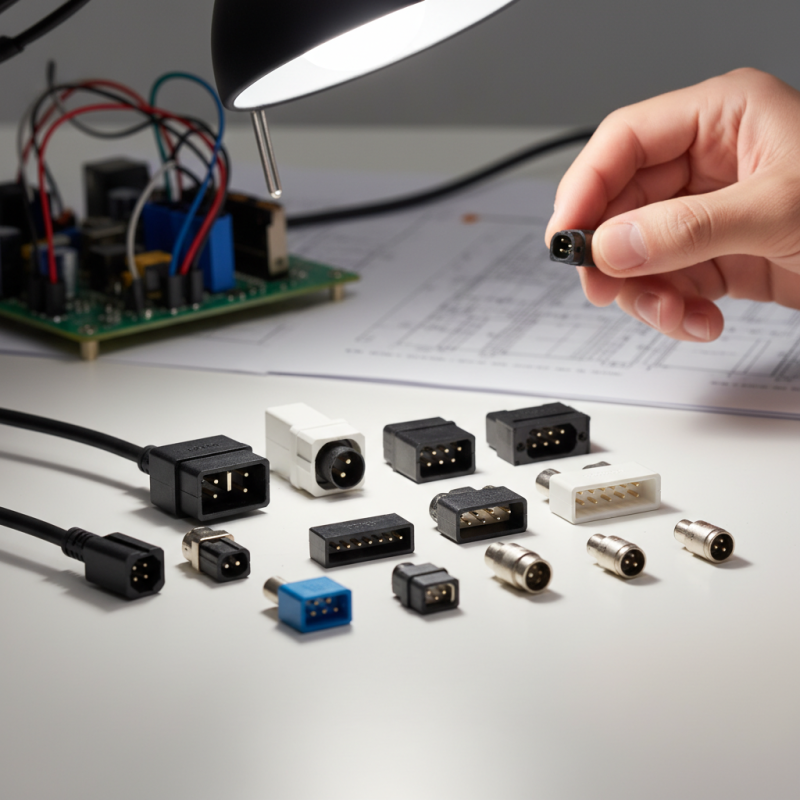
Understanding DC Connectors: Types and Applications
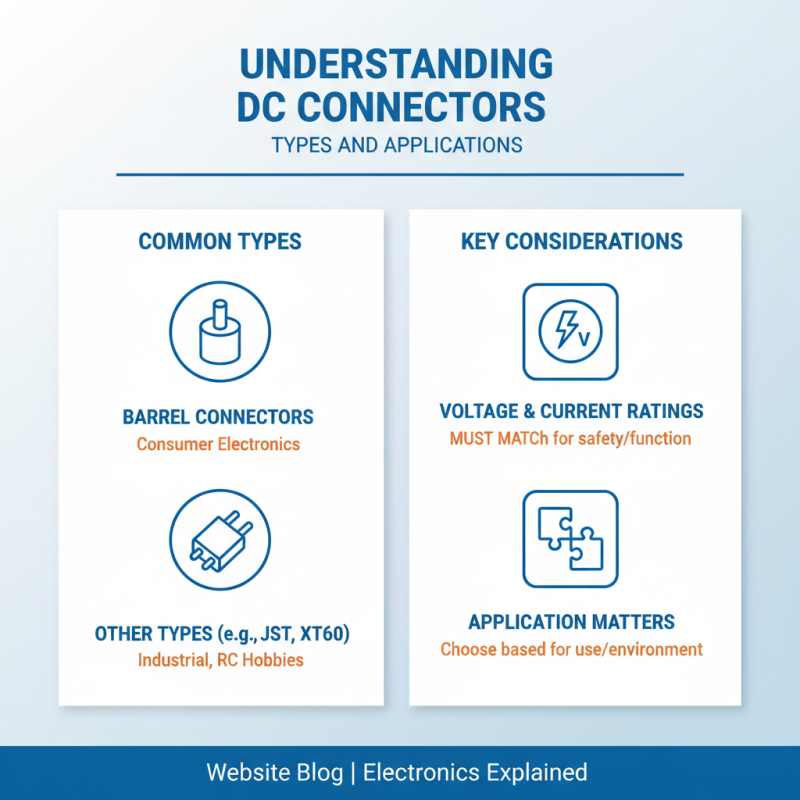
Choosing the right DC connector is essential for any electronic project. There are various types of DC connectors, each designed for specific applications. For instance, barrel connectors are commonly used in consumer electronics. They offer a simple interface that is easy to connect and disconnect. However, users often overlook the importance of matching voltage and current ratings.
Another popular option is the Ac Connector. This type is versatile and can accommodate multiple power levels. It can be found in many household devices. While Ac Connectors are robust, they may require more space than other options. Designers may struggle with the layout if space is a concern. Additionally, ensuring compatibility with existing equipment is crucial.
Some connectors are designed for high current applications. These require careful handling to avoid overheating. There are also waterproof options available that are vital in outdoor settings. It’s important to assess your project's environment. Mistakes can lead to device failure or safety hazards. Evaluating the specific needs of your project can significantly impact performance and longevity.
Key Specifications of DC Connectors You Should Consider
Choosing the right DC connector for your project can be daunting. It's essential to focus on key specifications that suit your specific needs. One critical factor is the voltage rating. Ensure the connector can handle the required voltage without overheating or becoming damaged. Many projects may set the voltage too high, risking failure.
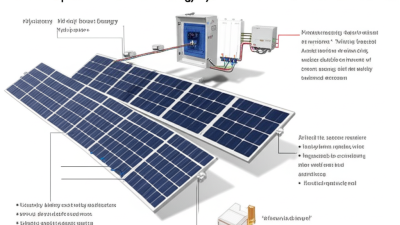
Current rating is another vital specification. It refers to how much current the connector can carry. Insufficient current ratings can lead to poor performance. Understand your project's demands to mitigate issues. A Solar Connector, for instance, needs to be robust enough to handle significant load during peak sunlight hours.
Physical size and compatibility with cables matter too. A connector too large or too small won't fit properly. This can become a frustrating point in your project. It’s also important to consider environmental factors. Will it be exposed to moisture or dust? Choosing a connector with suitable environmental ratings can help avoid complications in the long term.
How to Determine the Current and Voltage Requirements
When choosing a DC connector, understanding current and voltage requirements is crucial. Begin by determining the voltage your device operates at. This will help you avoid over-voltage or under-voltage that can damage your project. Measure the voltage with a multimeter, if necessary. Common voltages include 5V, 12V, and 24V.
Next, assess the current requirements of your device. Current is essential for ensuring reliable performance. Check the device specifications or use an ammeter to measure it. Devices with higher power needs require connectors that can handle greater current levels.
Sometimes, users underestimate their requirements. Using a connector rated for too low a current can lead to overheating. This might cause intermittent failures or even permanent damage. It’s also easy to overlook the impact of long cable runs. Voltage drop across cables can affect overall performance.
Choosing the right connector involves more than just matching voltage. Ensure it meets the current needs, and account for any additional factors.
Evaluating Size and Form Factor for Your Project
When evaluating size and form factor for your project, the dimensions of your DC connector play a crucial role in overall design. Many designs fail when the connector does not fit well within the intended enclosure. A report from the International Electrotechnical Commission (IEC) states that 30% of product failures stem from improper connector selection. This highlights the need for precise measurements. For example, a connector that is too large can disrupt the layout of your circuit board.
The width and height of connectors can vary significantly. Selecting a compact design can be beneficial, especially in projects where space is limited. For instance, a study by the Electronics Industry Association revealed that connectors making use of efficient energy storage solutions enhance performance, particularly in battery-powered applications. However, prioritizing size could compromise durability. Overly compact options might lead to overheating or mechanical strain.
Furthermore, the form factor dictates how connectors interface with other components. A mismatch can lead to poor connections, which may affect energy transfer. For projects that utilize an Energy Storage Connector, ensuring a seamless fit helps maintain efficacy. Projects can sometimes overlook the importance of connector form. Neglecting these aspects might lead to significant issues down the line. It’s wise to prototype different sizes to avoid costly revisions later.
Matching Connector Type with Power Supply Options
Choosing the right DC connector for your project involves several considerations. Matching the connector type with power supply options is crucial. Take time to assess your specific needs. Are you working with a battery, a wall adapter, or a power bank? Knowing your energy source helps you pick the right connector. Each option has distinct specifications.
Connector compatibility matters. For example, a barrel connector works well with a standard power supply. However, if you choose the wrong type, the device could malfunction. It’s important to verify the voltage and current ratings. An underpowered connector may not provide sufficient energy. Conversely, overloading can cause damage.
Given these factors, you may face some challenges. Connectors come in various sizes and pin configurations. A wrong match can lead to frustrating failures. Sometimes, you might feel overwhelmed by these choices. It’s okay to seek help or consult with more experienced peers. Keep experimenting until you find the ideal fit. Understanding these details can lead to successful project outcomes.
Ensuring Compatibility with Your Device’s Design
Choosing the right DC connector is crucial for device compatibility. The right fit ensures effective power transfer and maintains the integrity of your design. For instance, a recent industry report indicates that 42% of device failures are attributed to connector mismatches. This statistic highlights the importance of understanding your device’s design requirements before selection.
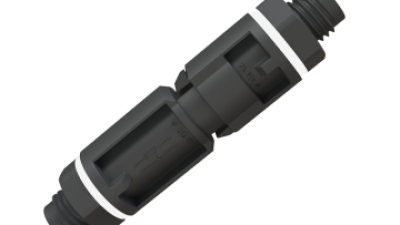
When evaluating connectors, consider factors like voltage rating, current capacity, and mechanical fit. The Mc4 Solar Connector, commonly used in solar applications, illustrates the variety of connectors available. Its design allows for efficient connection in diverse environments. However, many projects still overlook the connector's specifics, leading to unexpected failures. Lack of attention to detail can result in costly delays.
Another aspect to consider is the environmental conditions. Some connectors fare poorly in extreme temperatures. A report noted that 30% of outdoor installations fail due to inadequate connector choice. Reflecting on these details can save time and resources for your project. Proper assessment of all factors can prevent potential issues and enhance your device's overall performance.
DC Connector Type Preferences for Various Projects
Common Mistakes to Avoid When Selecting DC Connectors
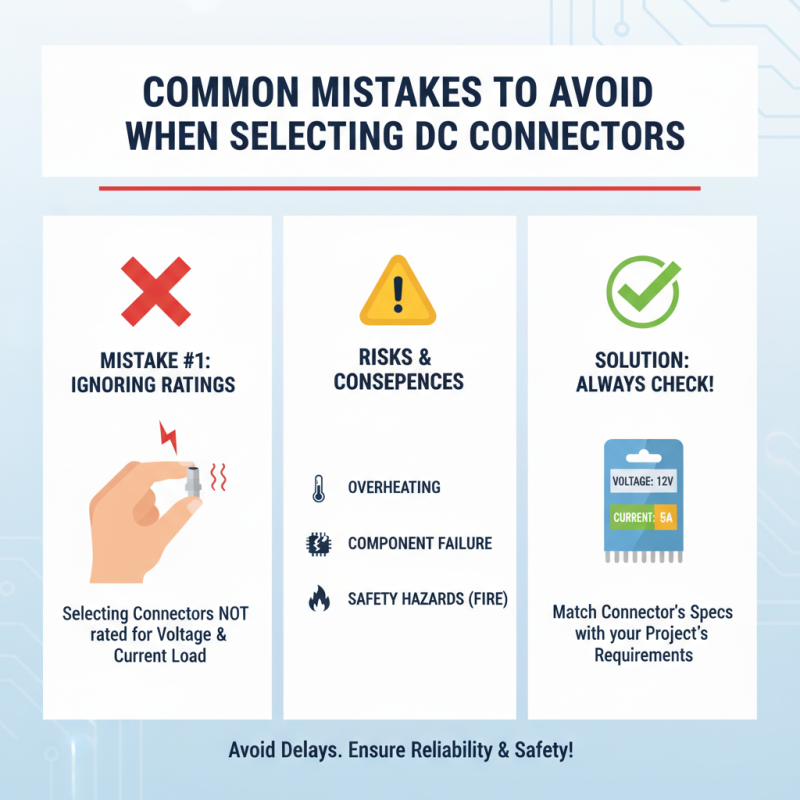
When selecting DC connectors, common mistakes can lead to project delays. One frequent error is ignoring the voltage and current ratings. If the connector cannot handle the load, it may overheat or fail. This can damage your project or even cause safety issues. Always check these ratings before making a decision.
Another oversight is misjudging the physical size and shape of connectors. A connector that is too large or oddly shaped can pose installation problems. It’s essential to ensure that the connector fits within the available space. Additionally, consider the ease of connection. A tight fit might be secure, but it can lead to frustration during maintenance.
Neglecting to account for environmental factors is also a mistake. Is your project exposed to moisture, dust, or extreme temperatures? Choosing a connector that isn’t sealed or rugged enough can result in failures. Reflect on the environment where the connector will be used. Failing to consider these factors can lead to unnecessary issues down the line.
Maximizing Solar Energy Efficiency: The Role of QC4.3 Connectors in PV Systems
Maximizing solar energy efficiency is critical as the demand for renewable energy sources continues to rise. One key component that plays a significant role in optimizing photovoltaic (PV) systems is the QC4.3 connector. This connector offers powerful practicality and extensive applicability across various solar energy setups, making it a preferred choice for installations worldwide. According to the International Energy Agency (IEA), global solar capacity has increased by over 20% annually for the past few years, underscoring the need for reliable components that can support this rapid growth.
The QC4.3 connector stands out not only for its robust design but also for its ease of installation and cost-effectiveness. This reliability minimizes both labor and operational expenses, allowing for more efficient project implementation. As highlighted in the "Photovoltaics Report" by Fraunhofer Institute, the levelized cost of electricity (LCOE) for solar energy has dropped significantly due to advancements in technology, including the integration of efficient connectors like QC4.3. Additionally, these connectors are TUV and UL certified, ensuring that they meet rigorous safety and performance standards, thereby catering to the high demands of both industry professionals and end-users.
As the solar industry continues to evolve, the role of connectors such as QC4.3 cannot be overstated. Their ability to facilitate higher energy yields while maintaining safety and reducing installation costs positions them as a critical element in the future of PV systems. With industry reports indicating that solar energy could account for up to 30% of the global electricity supply by 2030, harnessing the potential of effective connection solutions will be essential in scaling the benefits of solar technology.
FAQS
: Check the device specifications. Use a multimeter if needed. Common voltages are 5V, 12V, and 24V.
Current ensures reliable performance. Underestimating can lead to overheating or device damage. Always check specifications.
It can lead to overheating. This may cause intermittent failures or permanent damage to your device.
Voltage drop across cables can impact overall performance. Consider this when choosing connectors for longer distances.
Assess whether you're using a battery, wall adapter, or power bank. Each has distinct specifications for compatibility.
It's okay to seek help. Consult more experienced peers. Keep experimenting until you find the right connector fit.
Yes, it can lead to malfunctions. Always verify voltage and current ratings to avoid damage.
Connectors come in various sizes and configurations. A mismatch can lead to frustrating failures in your project.
Ensure connectors match both voltage and current needs. Consider all factors for optimal device performance.
Conclusion
When selecting the appropriate DC connector for your project, it is essential to understand the different types and their specific applications. Key considerations include specifications like current and voltage requirements, as well as the size and form factor suited for your device. Evaluating power supply options and ensuring compatibility with your device’s design will further aid in the selection process.
Additionally, avoiding common mistakes, such as overlooking connector durability or misestimating power needs, can significantly impact the effectiveness of your chosen DC connector. By following these guidelines, you can make an informed decision that meets your project's operational requirements and enhances overall performance.