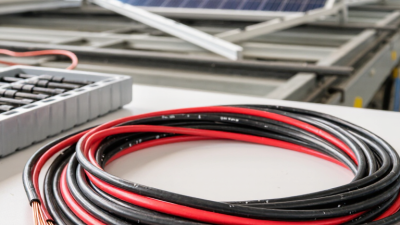
As solar installations ramp up in 2026, picking the right solar power cablesbecomes more than just a technical detail—it's a pretty practical engineering decision. The quality of the cables you choose can really impact things like how much energy you get, safety from fires, how much maintenance you'll need down the line, and how stable your whole system remains over the years. Usually, the best options are certified Photovoltaic Cables like H1Z2Z2-K or PV Wire—they’re designed to handle tough environments, whether it's rooftops, big utility-scale setups, or floating solar arrays.
This guide walks through the 2026 market, focusing on some key criteria that you can actually measure and compare. We look at things like voltage ratings, the materials used for conductors, insulation durability, temperature resistance, UV protection, flexibility, and certification status. Standards from IEC and UL testing are good benchmarks to keep in mind. Big names like Prysmian, Nexans, and HELUKABEL are constantly working on new products and improvements, thanks to their work on major projects and ongoing research. But honestly, just knowing the brand doesn’t tell you everything. What truly matters is the specific conditions on your site—because a well-known brand isn’t a guarantee that the cable will perform well in your particular situation.
A decent cable should hold up through years of sun exposure, rain, heat, and thermal expansion and contraction. Imagine a cable running on a hot rooftop next to a metal rail at noon—if the insulation isn't solid, it might wear out faster than you'd hope. Installation quality also makes a big difference. Even the best cable can have issues if it's installed poorly—like if it's bent too much, routed badly, or connections are loose. And honestly, no single product is perfect across all scenarios. Data sheets can vary depending on where you're buying and the specifics of your project. So, this overview compares top cables and manufacturers, but it doesn’t claim one is always better than another. It’s meant to help installers, engineers, and buyers make smarter, evidence-based choices for safer, more reliable solar setups in 2026.
Solar Power Cables: Definition, Functions, and Key Applications
Solar Power Cables: Definition, Functions, and Key Applications
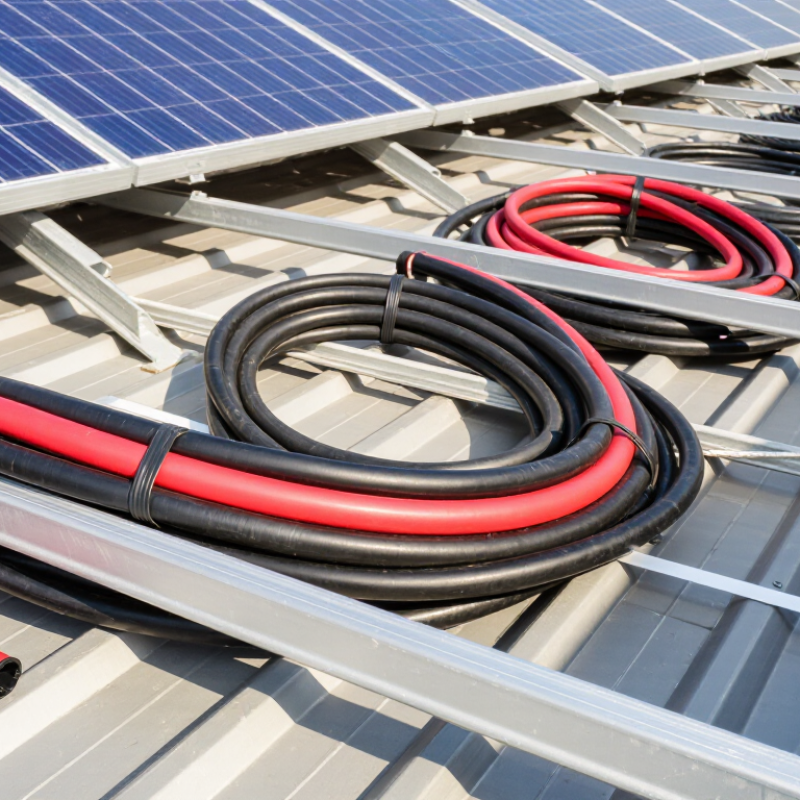
Solar Power Cables carry direct current from photovoltaic modules to inverters, batteries, and distribution equipment. They also support safe energy transfer across rooftops, ground arrays, and floating solar platforms. Unlike ordinary building wire, they face ultraviolet radiation, rain, heat, wind movement, and occasional rodent damage. Their insulation usually uses cross-linked materials that resist cracking and moisture. Correct sizing reduces voltage loss and limits unwanted heating.
In 2026, high-quality photovoltaic cables commonly include H1Z2Z2-K, USE-2, and other cables tested for solar applications. The best option depends on voltage, installation route, temperature, and local electrical rules. Solar Power Cables And Connectors must work as one system.
A poorly matched connector can create resistance, heat, and a visible brown mark near the contact point. Field inspections often find cables bent too tightly or resting against sharp metal edges. No cable choice is perfect. Even a certified product can fail after careless installation or repeated movement.
Tips: Check the cable’s voltage rating, temperature range, conductor size, and certification before installation. Follow standards such as IEC 62930, EN 50618, or applicable national requirements. Keep connectors clean and fully engaged. Leave enough slack for thermal expansion, but avoid loose loops that collect water. A datasheet helps, but site conditions deserve equal attention.
How Solar Cables Work in Photovoltaic Power Systems
What Are the 2026 Top Solar Power Cables?
Solar cables carry direct-current power from photovoltaic modules to combiner boxes, inverters, and batteries. Their design differs from ordinary building wire. They must resist sunlight, heat, moisture, ozone, and repeated temperature changes. In field installations, the outer jacket can feel warm enough to soften gloves. That detail matters.
Common choices include single-core photovoltaic cables with cross-linked insulation and strong ultraviolet resistance. Copper offers excellent conductivity, while aluminum can reduce weight and material cost when properly terminated. Solar Cables And Connectors must also match in voltage, current, diameter, and environmental rating. Poor compatibility can create heat at the connection. A small hot spot may become a serious failure.
Tips: Keep cable runs short and direct. Avoid sharp bends near connectors. Secure cables above the roof surface, where water and debris collect less easily. Inspect crimped terminals for loose strands and uneven compression. Use a calibrated crimping tool when possible. I have seen tidy-looking systems fail because a connector was only partly engaged. That is easy to miss. Cable sizing should consider current, distance, ambient temperature, and grouping. Tables provide a starting point, not absolute certainty. Installers should verify local electrical requirements and test insulation before energizing the system. Mistakes happen, especially when rushed.
What Are the 2026 Top Solar Power Cables?
How Solar Cables Work in Photovoltaic Power Systems
Solar power cables carry direct current from photovoltaic modules to combiner boxes, charge controllers, and inverters. Modern PV cables are typically double-insulated, UV-resistant, ozone-resistant, flame-retardant, and designed for outdoor operation. Common H1Z2Z2-K cable systems are rated up to 1,500 V DC, with a normal conductor operating temperature of approximately 90°C.
The chart shows representative continuous current capacities for common copper conductor sizes. Actual ampacity depends on installation method, ambient temperature, cable grouping, insulation temperature rating, and allowable voltage drop. Cable sizing should follow applicable electrical codes and project calculations.
Top Solar Power Cable Types for 2026
For 2026, the top solar power cable types must handle heat, ultraviolet exposure, moisture, and repeated roof movement. PV wire remains essential for direct-current connections between modules, combiner boxes, and inverters. Double-insulated versions offer stronger protection in demanding outdoor environments. Copper conductors provide excellent conductivity and flexibility, while aluminum can reduce costs in larger installations. Cable sizing still requires careful calculation.
Solar Panel Connectors And Cables should be selected as one electrical system, not as separate accessories. Compatible connectors help prevent resistance, arcing, and moisture entry at connection points. For rooftop arrays, UV-resistant photovoltaic cables with durable insulation are practical choices. Underground runs may require cables with stronger moisture protection and suitable burial ratings. Always check conductor temperature ratings, voltage limits, local electrical codes, and project specifications.
Battery systems are increasing demand for flexible storage cables and short, high-current connections. These cables need secure crimping, abrasion resistance, and clear polarity identification. AC cables from inverters to distribution equipment also require correct insulation and load capacity. A practical lesson from site inspections is simple: neat routing does not guarantee electrical safety. I have seen well-organized arrays with poorly tightened terminals. That assumption is easy to make, and often wrong. Temperature changes can loosen weak connections over time. Tools and testing matter.
Materials, Insulation, and Performance Standards
What Are the 2026 Top Solar Power Cables?
Materials, insulation, and performance standards will define the strongest solar cables in 2026. IEA PVPS reported over 400 GW of new photovoltaic capacity in 2023, pushing cable reliability into sharper focus. More installations mean longer cable routes, hotter rooftops, and greater exposure to moisture. The preferred conductor remains finely stranded copper, often tin-coated for corrosion resistance. Aluminum can reduce weight and cost, but termination quality becomes more demanding.
Insulation is equally important. Cross-linked polyolefin, or XLPO, offers strong resistance to ultraviolet radiation, ozone, heat, and water. Halogen-free compounds can also reduce harmful smoke during fire conditions. Fraunhofer ISE’s Photovoltaics Report 2024 confirms silicon technology still dominates module deployment, so cable compatibility with high-voltage DC systems remains essential. Small mismatches can create large maintenance problems.
For 2026 projects, cables should align with IEC 62930 or EN 50618 requirements and use conductors classified under IEC 60228. These standards address voltage ratings, insulation performance, mechanical durability, and flame behavior. A 1.5 kV DC rating is increasingly practical for utility-scale arrays. Designers should also verify temperature limits, bending radius, connector compatibility, and accelerated-aging test results.
Field experience suggests installation errors still cause failures more often than material defects. That is uncomfortable, but useful. A cable may pass laboratory testing and still fail when sharply bent behind a module.
How to Compare Solar Cables for Different Installations
Comparing solar cables starts with the installation, not the product label. IRENA’s Renewable Capacity Statistics 2024 recorded about 1,419 GW of global solar capacity by the end of 2023. That scale increases pressure on every connection, from rooftop arrays to utility fields.
For rooftop systems, check conductor size, voltage drop, UV resistance, and bending space around rails. A 4 mm² cable may suit a short run, but longer routes can create measurable losses. Measure the distance first.
Utility installations need stronger mechanical protection and stable performance in heat, moisture, and direct sunlight. Cables certified for photovoltaic use should match the system’s DC voltage and relevant requirements, including IEC 62930 or equivalent national standards.
NREL’s 2024 Best Research-Cell Efficiencies chart shows rapid progress in module performance. Higher module output can increase current, so old cable assumptions may become unreliable. I would verify ampacity at the actual installation temperature, not only the catalog temperature.
Battery systems require different attention. Solar Battery Cables should tolerate repeated current demand, tight bends, and secure terminal connections. Keep them practical.
Undersized conductors can heat noticeably near lugs, even when the cable feels cool elsewhere. The IEA’s Renewables 2024 report expects solar PV to remain the largest source of new renewable capacity through 2030. That forecast supports careful specification, although it does not replace site testing. Cable routes, connector compatibility, and local inspection rules still deserve a final review.
Installation, Safety, and Maintenance Requirements
What Are the 2026 Top Solar Power Cables?
The leading solar power cables in 2026 combine UV resistance, flexible insulation, and stable performance under high DC voltage. H1Z2Z2-K cables remain widely specified for photovoltaic systems. They typically use tinned copper conductors and insulation tested for outdoor exposure. Select cables certified under relevant IEC or national standards. Local electrical codes still control the final choice.
Installation demands careful routing. Keep cables away from sharp metal edges and standing water. Respect the manufacturer’s minimum bend radius. Secure long runs with UV-resistant clips, not ordinary plastic ties. Match connectors by design and rating. Never mix incompatible connector systems. De-energize circuits before cutting or terminating cables. DC arcs can continue silently and cause severe burns. Use insulated tools and verify the circuit with a properly rated meter.
Maintenance should include visual inspections after storms, heatwaves, and construction work nearby. Look for cracked insulation, loose connectors, discoloration, and cable sagging. A thermal scan can reveal abnormal resistance at connection points. Qualified technicians may also perform insulation resistance testing under approved procedures. I have seen tidy arrays hide one pinched cable beneath a panel. That detail is easy to miss. Maintenance schedules should reflect dust, salt, animals, and local weather, rather than follow a convenient calendar.
Solar PV Junction Box 3Qxy Integration: Insights from IEA PVPS Trends 2024 and NREL PV Cost Reports
As solar PV deployment expands, recent industry trends and cost analyses highlight the need for higher module efficiency, streamlined installation, reliable balance-of-system components, and better control of lifetime expenses. Junction boxes are increasingly important in this integration process because they connect electrical performance with manufacturing consistency and field reliability. A compact, adaptable design can help reduce wiring complexity, improve assembly efficiency, and support the diverse layouts found in utility-scale, commercial, and residential photovoltaic systems.
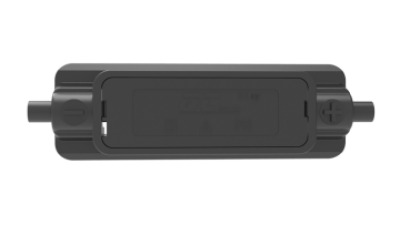
The 3Q Positive & Negative All-in-One junction box uses a distinctive one-board, one-box structure tailored to specific component requirements. By integrating positive and negative functions within a unified design, it promotes firm wiring, efficient electrical connections, and more consistent installation quality. Its flexible configuration can be adapted to different module specifications, mounting conditions, and installation environments, helping manufacturers address customized production needs without sacrificing structural stability. This approach also supports more efficient system integration, potentially reducing assembly steps, maintenance demands, and overall balance-of-system costs while contributing to dependable long-term PV performance.
FAQS
Finely stranded copper remains a dependable choice. Tin coating improves corrosion resistance in damp environments. Aluminum reduces weight and cost, but terminations require greater care.
XLPO resists ultraviolet radiation, ozone, heat, and water. It suits exposed rooftops and outdoor cable routes. Good insulation matters.
Halogen-free compounds can reduce harmful smoke during fire conditions. They may support safer building environments. Check the complete cable specification, not only the insulation label.
For 2026 projects, check IEC 62930 or EN 50618 requirements. Conductors should follow IEC 60228 classifications. Verify voltage, insulation, flame behavior, and mechanical durability.
A 1.5 kV DC rating is increasingly practical for utility-scale systems. Confirm compatibility with the modules, connectors, and inverter equipment. Higher voltage does not excuse poor installation.
Measure the cable route before choosing the conductor size. A 4 mm² cable may suit a short run, but longer routes increase voltage loss. Check UV resistance, bending space, and temperature conditions.
Utility cables need stable performance under heat, moisture, sunlight, and mechanical stress. Protection may be necessary along long routes. Inspect cable supports after severe weather.
Battery cables must handle repeated current demand and secure terminal connections. They also need flexibility around tight bends. Undersized conductors can heat near lugs.
Yes. Sharp bends, incorrect connectors, and poor routing can cause failures. Field installation errors may occur more often than material defects. I would inspect every bend, even when the cable looks undamaged.
Conclusion
Solar Power Cables are specially designed electrical conductors that transmit direct-current electricity from photovoltaic modules to inverters, batteries, and grid-connection equipment. In 2026, leading cable choices are expected to include single-core DC cables, multi-core AC cables, flexible extension cables, and storage-compatible cables, each suited to different system layouts and voltage requirements. Their performance depends on conductor material, insulation quality, weather resistance, flexibility, temperature tolerance, and compliance with applicable safety standards.
When comparing Solar Power Cables for residential, commercial, or utility-scale installations, users should consider current capacity, voltage rating, cable length, environmental exposure, mechanical protection, and compatibility with connectors and equipment. Proper installation requires correct polarity, secure connections, suitable routing, adequate bend radius, and protection from moisture, abrasion, heat, and ultraviolet radiation. Regular inspections can identify cracking, loose terminals, corrosion, or overheating, helping maintain system efficiency, electrical safety, and long-term reliability.