
Solar Cables Harness Purchasing: How to Balance Cost, Quality and Lead Time
For buyers sourcing Solar Cables Harness, the purchasing decision often extends beyond the quoted unit price. Cost, quality, and lead time all affect the final economics of a cable harness order, particularly when installation expenses and delivery schedules are taken into account. Rather than comparing suppliers on initial price tags alone, procurement teams are increasingly assessing the total landed and installed cost to understand the actual cost of each option.
Cost optimization for Solar Cables Harness
- Material and Specification Optimization
- Replacing copper conductors with aluminum alloy: For main trunk cables or long-distance transmission, large cross-section aluminum alloy cables can replace copper conductors. Although aluminum has lower electrical conductivity and requires a larger conductor size, material costs can be reduced by 30%–50%, while also reducing cable weight.
- Accurate cross-section calculation: Cable sizing can be based on maximum current and allowable voltage drop, typically controlled within 1%–2%, rather than excessive safety margins. Where requirements allow, this can reduce oversized conductors, such as from 6mm² to 4mm².
- Evaluating lower-cost sheath materials: When weather, UV, and flame-retardant requirements are met, the formulation and wall thickness of cross-linked polyethylene (XLPE) or low-smoke zero-halogen (LSZH) materials can be optimized, while suppliers can be evaluated for cost performance.
- Structural and Custom Design Optimization
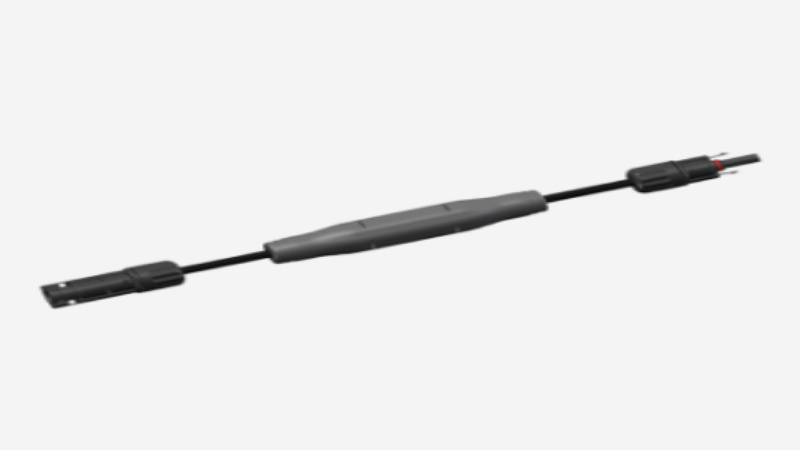
- Modular and pre-assembled harnesses: Cable cutting and crimping can be moved from the installation site to the factory. Factory-preassembled harnesses with Branch Connectors can reduce installation errors and cut on-site labor costs bymore than 50%.
- Optimizing branch configurations: A Trunk & Drop structure, combining an integrated main trunk with short branch cables, can replace routing multiple string circuits directly to the combiner box. This shortens total cable length and reduces copper and connector consumption.
- Reducing excess cable length: Based on photovoltaic mounting and module layouts, 3D routing models using SolidWorks or CATIA can determine each harness length to the centimeter, reducing waste caused by excessive cable allowances.
- Manufacturing and Processing Cost Reduction
- High-efficiency integrated injection molding: T-shaped or Y-shaped branch points can use integrated injection molding instead of mechanical assembly. This provides IP68 water and dust protection while supporting automated batch production and reducing manual processing costs.
- Increasing crimping automation: Fully automatic stripping and crimping machines can improve terminal crimping stability and consistency. Each 1% reduction in defect rate reduces material scrap and rework costs.
- Reducing excess packaging materials: Large reels or industrial reusable logistics boxes can replace excessive disposable plastic film and cardboard packaging.
How to Ensure Compliance with Quality Standards and Certifications
- Key Compliance and Certification Standards by Market
Europe and International Markets
- EN 50618: The main European standard for photovoltaic cables, replacing the earlier 2PfG 1169 standard.
- IEC 62930: An International Electrotechnical Commission standard recognized across many countries and regions.
- TÜV / VDE Certification: Third-party certifications widely required for access to the European market.
North American Market (U.S. and Canada)
- UL 4703: The core U.S. standard for photovoltaic cables (PV Wire), with requirements for thickness and abrasion resistance that differ from European standards.
- NEC (National Electrical Code): PV installations must meet applicable wiring requirements, including NEC 690.
Chinese Market
- NB/T 42013 or GB/T 34926: National and industry standards for photovoltaic cables in China, generally requiring CGC (China General Certification Center) or CQC (China Quality Certification Center) certification.
- Quality Indicators Specific to PV Harnesses
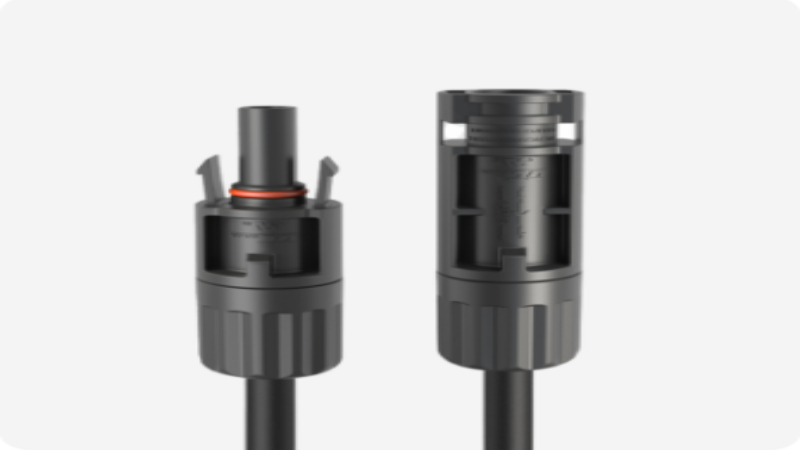
- Connector Compatibility: Harness-end connectors, such as MC4 or compatible models, should carry TÜV or UL certification. Original brands such as Stäubli MC4 are recommended to reduce excessive contact resistance and potential fire risks from mixing connectors from different brands.
- Water and Dust Protection: T-type and Y-type branch connections and connectors should meet IP68 protection requirements for long-term exposure to rain and moisture.
- Branch Overmolding: Branch points should be overmolded with UV- and aging-resistant materials to keep internal conductors fully insulated.
Solar Cables Harness Lead Times and Capacity Management
- Capacity Assessment and Supplier Qualification
- Core equipment capacity: Solar cable capacity depends largely on the number and speed of Extruders, while Solar Cables Harness production depends on automatic terminal crimping machines, wire stripping machines, and injection molding machines. Suppliers should provide an Equipment List and Maximum Daily/Monthly Capacity Calculation Sheet before orders are placed.
- Securing key raw materials: Solar cable costs and supply are strongly affected by copper, aluminum, and XLPO (cross-linked polyolefin with low smoke and halogen-free properties). Procurement teams should verify stable long-term copper rod and aluminum rod suppliers and any exclusive supply agreements for shortage periods.
- Workforce and shift capacity: Suppliers should demonstrate the ability to operate two shifts for 24-hour production during peak periods and maintain sufficient skilled crimping operators.
- Forecasting and Rolling Planning: Flexible Coordination
- Shared Rolling Forecast: Core suppliers can receive a 3–6-month rolling demand forecast.
- Long term (3–6 months): Supports material preparation and price hedging or locking for copper and plastic compounds.
- Medium term (1–2 months): Guides production slot planning.
- Near term (current month): The formal PO is issued and enters production.
- Capacity Booking:Before peak season, a capacity reservation agreement can secure priority production capacity, even when final product specifications require minor adjustments.
- VMI and Safety Stock at Key Stages: Building a Buffer
- VMI for key materials: For standardized solar harness connectors such as MC4 and MC4-Evo 2, suppliers can maintain 2–4 weeks of connector inventory under a Vendor-Managed Inventory (VMI) arrangement.
- Finished and semi-finished stock: For high-volume standard DC cables, including 4mm² and 6mm² solar cables, suppliers can produce stock during off-peak periods and store it in warehouses or distribution centers for dispatch as needed.
If you are planning a new solar project or reviewing your current sourcing strategy, QC Solar can help you evaluate the right harness solution for your project requirements. Contact us to discuss your specifications, quality standards, and delivery needs.